Visiting an Indigenous Community in the Amazon
Community visits appear on a lot of Amazon itineraries and are described badly on most of them. Here is what one actually involves on the tours running out of Manaus, why the phrase “uncontacted tribe” has no place in a tour brochure, and how to be a decent guest for the hour or so you are there.
Choose an itinerary with a hosted community visit. Explore Amazon Safari From Manaus ↗
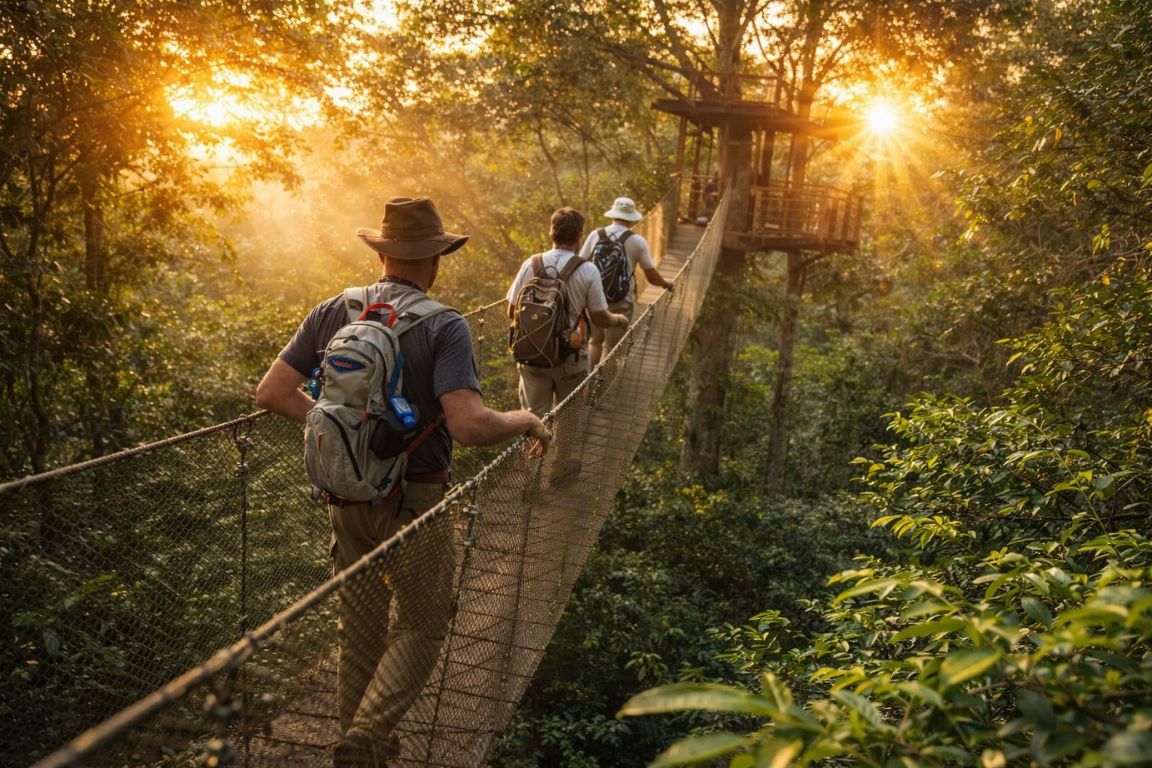
Trip choice: Visit the Meeting of the Waters, a Tuyuka community and a short suspended forest trail, with a regional lunch. Explore This 6.5 hours Experience ↗
Two very different things get filed under the same heading when people search for this, and separating them is the whole point of this post. One is a visit to a community that has chosen to receive outsiders, which is a real and reasonable part of several itineraries here. The other is the idea of seeking out peoples living in isolation, which is not a tourism product, is not sold by anyone reputable, and should not be on anybody's list.
What actually happens on a community visit?
It is a short, hosted visit, usually around an hour, on the way through. Guests are welcomed into the community, a guide interprets, and the conversation covers daily life, traditions and craft. Handmade items are often available to buy. That is the honest scope of it, and the listings that describe it plainly are the ones to trust.
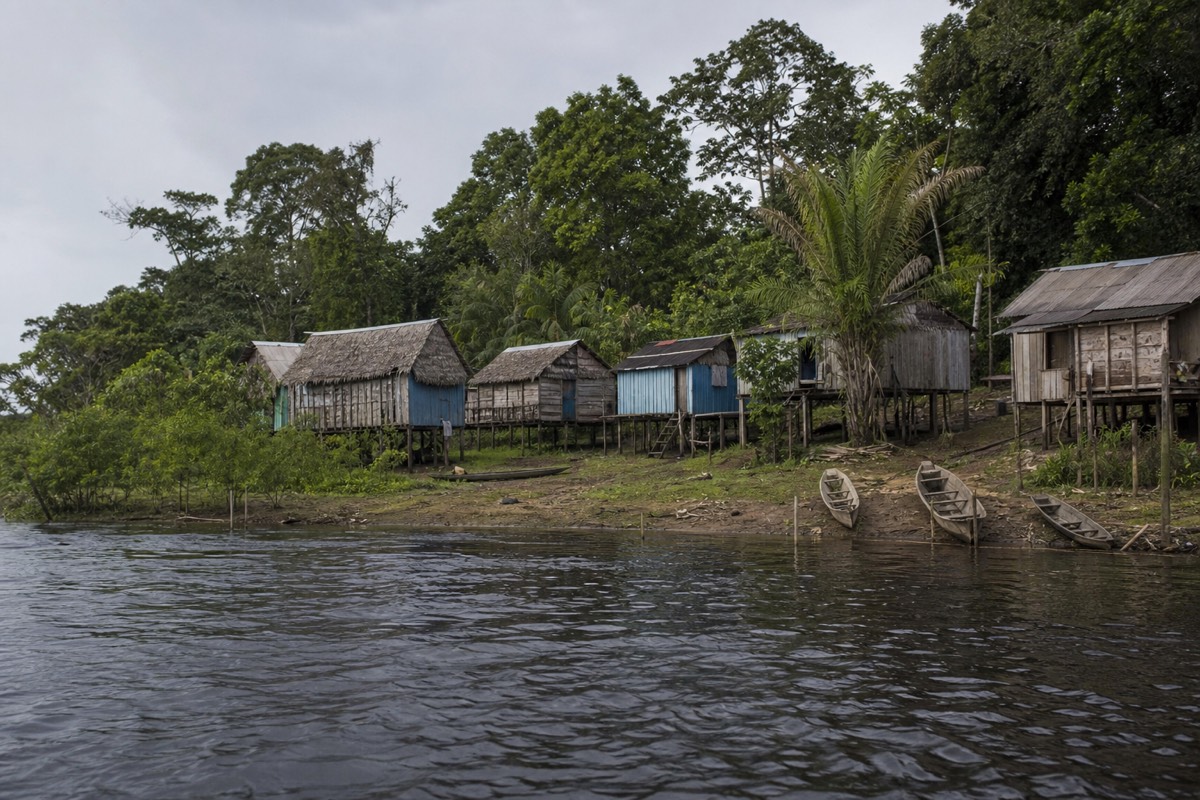
On this site the clearest example sits inside the jungle safari from Manaus, whose inclusions list a Tuyuka Indigenous community visit with cultural insights, and whose itinerary allows roughly an hour for it between the Meeting of the Waters and the suspended trails of the Janauary park. The Meeting of the Waters tour with pink dolphins and lunch lists a stop at a local Indigenous village to learn about way of life, traditions and crafts. The overnight rainforest experience mentions an indigenous village visit among its inclusions, and the 3-day wildlife, culture and pink dolphins adventure builds a visit to a local family's home into its final morning, to see how they live in the forest.
What none of those listings promise, and what we will not add, is a performance or a spectacle. We are not going to describe ceremonies we have not verified, publish population figures we cannot source, or dress an hour-long visit up as deep cultural immersion. If a description of a community visit reads like a documentary trailer, that is a reason to be sceptical of the operator, not a reason to book.
Why this is not an “uncontacted tribe” experience
Because uncontacted and isolated peoples are not visited, by anyone, on purpose. FUNAI, Brazil's official indigenous affairs agency, has since 1987 worked to a policy of protection without initiating contact with isolated peoples, respecting their right to decide for themselves. There is no ethical version of a tour that goes looking for them.
That policy replaced an earlier contact-first approach, and it was changed for a hard reason: initiating contact caused documented harm, including disease and death, among peoples with no immunity to illnesses the outside world carries as routine. Protection without contact is not squeamishness. It is the lesson learned from what happened when the opposite was tried.
So the distinction is categorical, not a matter of degree. A community that has chosen to receive visitors, that has decided what it shares and on what terms, and that earns from hosting, is doing something entirely different from a group living in isolation whose choice is to be left alone. Conflating the two, which travel marketing does constantly, does a disservice to both. If you see a trip advertised anywhere as access to uncontacted people, that is your signal to close the tab.
There is no appropriate tourism booking for contacting isolated peoples. The hosted visits elsewhere on this page are a different experience.
Is it ethical to visit at all?
It can be, and the question is a fair one to ask out loud. What separates a decent visit from an extractive one is consent, control and benefit: the community agreed to host, sets the terms of what happens, and gets something real from it. A visitor cannot verify all of that from a booking page, which is exactly why it is worth asking the operator.
Our honest position is that the tourism version of this will always be a shallow encounter, because an hour is an hour. That does not make it worthless. Handled well, it is a straightforward economic exchange in which the community controls the terms and visitors leave with a slightly less cartoonish picture of who lives in the Amazon and how. Handled badly it is intrusive, and the difference usually shows in the language the operator uses before you ever arrive.
Questions worth asking when you book: is the visit arranged with the community rather than around it, how long is the stop, is photography permitted and on what terms, and does the community benefit directly. A guide who answers those easily is a good sign. One who deflects is also telling you something.
How to be a good guest
Follow your guide's lead, ask before photographing anyone, buy craft if you want a souvenir, and keep your expectations proportionate to an hour-long visit. Most of what makes a visit go well comes down to treating it as visiting people rather than viewing a site.
| Do | Do not |
|---|---|
| Ask your guide what is welcome before you do it | Photograph individuals, especially children, without asking |
| Buy handmade craft directly if you want a keepsake | Haggle hard over small sums |
| Ask questions through your guide, and listen to the answers | Treat the visit as a photo stop with people in it |
| Clear any gift with your guide first | Hand out sweets, money or objects unasked |
| Accept that an hour is an hour | Expect ceremony, performance or deep access |
On gifts specifically: one listing on this site notes that some past guests brought small items such as toys or books if they wanted to connect. That can be well meant and still land badly if it is unsolicited, so the rule that works is simple. Ask the guide first, and let the answer be the answer.
Which tours include a community visit?
Four itineraries on this site mention one, at different depths, and it is always one element among many rather than the point of the trip. If it matters to you, check the specific listing rather than assuming, because inclusions differ.
| Tour | What the listing says | Length |
|---|---|---|
| Amazon Jungle Safari from Manaus | Tuyuka Indigenous community visit with cultural insights, roughly an hour | 6.5 hours |
| Meeting of the Waters and Pink Dolphins with Lunch | Stop at a local Indigenous village to learn about way of life, traditions and crafts | 6 hours |
| Overnight Rainforest Experience | Indigenous village visit listed among the inclusions | 2 days |
| 3-Day Wildlife, Culture and Pink Dolphins Adventure | Morning visit to a local family's home to see how they live in the forest | 3 days |
The 3-day version is the one that gives the encounter the most room, simply because it is not squeezed between two other highlights on a single boat day. Three days based at a floating lodge south of Manaus also means the surrounding trip is quieter: sunrise canoe runs, jungle treks with local guides, and the sort of pace where a conversation can go somewhere. If you would rather sample it inside a shorter day, the half-day safari is the cheapest way in at $38.
The short version
A community visit on an Amazon tour is a brief, hosted stop with people who agreed to host it. Go in with proportionate expectations, follow the guide, ask before you photograph, and buy something if you want to. Do not go looking for isolated peoples, and be wary of anyone offering them. If the cultural side is what draws you to the region, the 3-day wildlife, culture and pink dolphins adventure gives it the most space of anything we list, and an Amazon tour from Manaus that includes it is the practical way to arrange the whole thing.