How to Plan a Trip to the Brazilian Amazon
Planning a Brazilian Amazon trip? Learn when to go, where to stay, costs, health tips, and why Manaus is the top gateway—everything you need in one guide.
Last updated: March 10, 2026
Set your departure city, available time and preferred way to explore. Explore Three-Day Amazon Wildlife And Culture Adventure ↗
Planning note: price ranges, sample schedules and percentage comparisons below are illustrative editorial estimates, not live quotes or measured predictions. The linked itineraries state their own duration, location, inclusions and restrictions; wildlife sightings are never guaranteed.
Where Should You Actually Base Your Brazilian Amazon Trip?
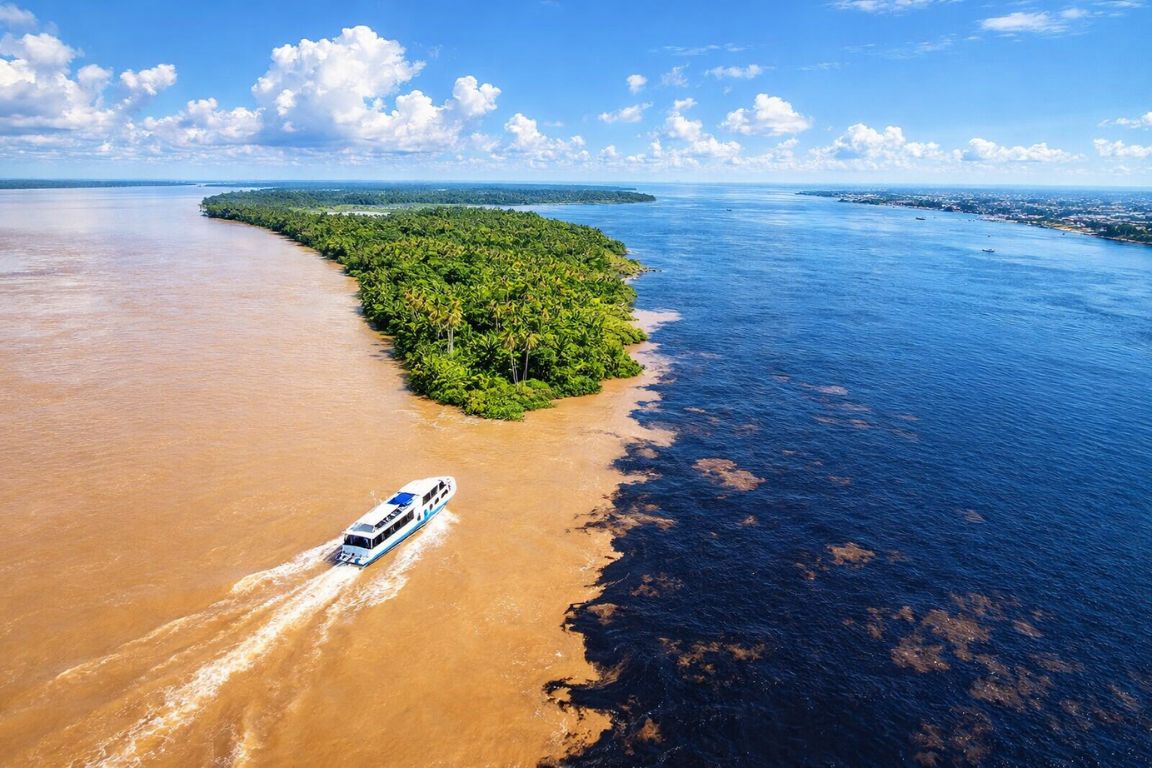
Manaus handles 70% of Amazon tourism for good reasons. The city sits at the Rio Negro and Amazon River confluence, offers direct international flights from Miami and Panama City, has developed tourism infrastructure with dozens of established lodges and tour operators, and provides the famous Meeting of Waters where black and brown rivers flow side-by-side for miles without mixing.
From Manaus, lodges scatter 30-180km away via boat transfers. The 30-60km range (1-2 hours by speedboat) accesses secondary forest with decent wildlife and indigenous community visits. The 80-120km range (3-4 hours) reaches better-preserved forest with improved wildlife odds. The 150-180km+ range (5-6 hours or overnight by slow boat) hits truly remote areas with maximum wildlife and authentic jungle experience.
Alter do Chão (near Santarém) offers the Amazon’s best beaches, the Tapajós River‘s stunning blue water, and a more relaxed beach-town atmosphere. It’s smaller, less touristy than Manaus, with fewer but quality lodge options. The Tapajós and surrounding areas have excellent wildlife and indigenous culture, though infrastructure is less developed. Flights connect through Belém or Manaus, adding complexity.
Belém serves as the Amazon’s Atlantic gateway, closer to river mouth, with distinct ecosystems including tidal forests and islands. It’s less visited, more authentic in terms of local Amazonian culture, but offers fewer established tourism operations. Wildlife viewing doesn’t match interior Amazon. Use this as entry/exit point for eastern Amazon exploration, not primary base.
Porto Velho and Rio Branco (western Amazon) remain frontier zones with minimal tourist infrastructure. These gateways access incredibly remote areas but require adventure tolerance and aren’t recommended for first-time Amazon visitors.
Iquitos, Peru and Leticia, Colombia are valid alternatives if you’re considering broader Amazon access. Iquitos offers excellent lodges, generally lower prices than Brazil, and good wildlife. Leticia sits at Brazil-Peru-Colombia tri-border with unique access but limited infrastructure.
For first-time Brazilian Amazon visitors, Manaus is the answer. The infrastructure, lodge options, tour variety, and flight access outweigh any “too touristy” concerns. Remote purists can choose distant lodges from Manaus base.
Most people base themselves in Manaus. Here’s our full rundown of Brazilian Amazon tours from Manaus so you know what’s actually available.
Table: Brazilian Amazon Gateway Cities Comparison
| Gateway | Distance from Major Forest | Infrastructure | Flight Access | Lodge Options | Wildlife Quality | Tourist Development | Best For | Avoid If |
|---|---|---|---|---|---|---|---|---|
| Manaus | 30-180km to quality forest | Excellent – full services | Direct international (Miami, Panama) + domestic | 50+ lodges, all price ranges | Good-Excellent (distance dependent) | High (70% of tourists) | First-timers, comfort, variety | Want zero tourists ever |
| Alter do Chão/Santarém | 20-100km to forest | Moderate – beach town services | Domestic only (via Belém/Manaus) | 10-15 lodges, mostly mid-range | Very Good | Low-Moderate | Beach + jungle combo, relaxed atmosphere | Need extensive infrastructure |
| Belém | 50-150km to quality areas | Good – major city | International (limited) + domestic | 5-10 lodges, limited options | Moderate (different ecosystem) | Low | Eastern Amazon, tidal forests, authentic | Primary jungle experience goal |
| Porto Velho | Variable, frontier access | Basic – frontier city | Domestic only | Very limited (2-5 options) | Can be excellent but very remote | Very Low | Adventure seekers, extreme remote | First-time visitors, need comfort |
| Iquitos, Peru | 40-150km to excellent forest | Good for Amazon standards | International (Lima connection) | 20+ lodges, good variety | Excellent | Moderate | Better value, excellent wildlife | Must be in Brazil specifically |
How Long Should You Actually Spend in the Brazilian Amazon?
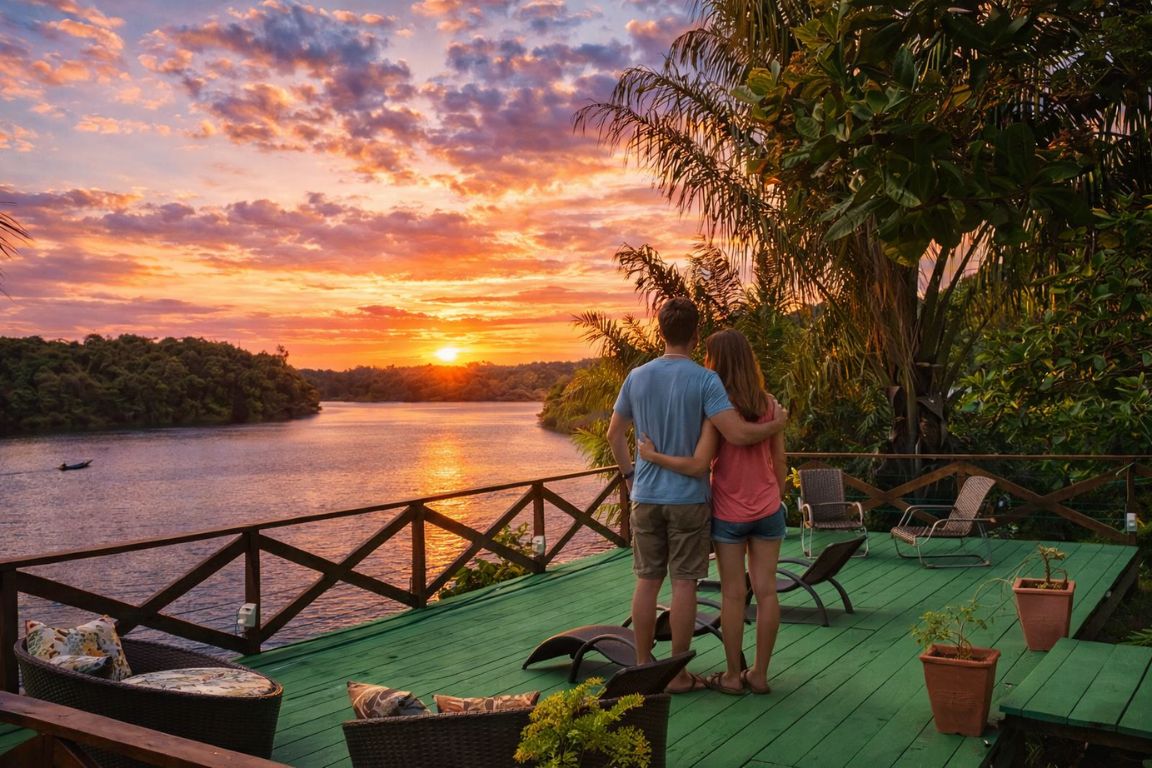 Minimum meaningful time is 4 days/3 nights at a lodge or on a riverboat. Here’s why: Day 1 is arrival, transfer, settling in, maybe one evening activity. Day 2-3 provide full activity days (morning, afternoon, night excursions). Day 4 is departure with morning activity if lucky. Less than this and you’re spending more time traveling than experiencing.
The optimal duration is 5-7 days/4-6 nights. This timeframe allows:
- Adjustment to heat, humidity, and rhythm (first day exhaustion is real)
- Multiple dawn wildlife excursions (best animal activity 5:30-7:30am)
- Variety of activities (rainforest hikes, canoe trips, piranha fishing, night spotting, indigenous visits, caiman watching)
- Weather buffer (if one day rains heavily, you have others)
- Deeper immersion where the forest’s pace replaces city stress
Extended stays (8-10+ days) work for serious wildlife photographers, researchers, or travelers on extended South America trips. Most visitors find 6-7 days hits the sweet spot before jungle fatigue sets in (heat, humidity, insects, limited connectivity, and repetitive meals start wearing).
Don’t try to “add a quick Amazon extension” to a 10-day Brazil trip. Flying to Manaus, transferring to lodge, experiencing anything meaningful, and returning eats 5-6 days minimum. The Amazon isn’t a day trip from Rio or São Paulo – it’s a destination requiring commitment.
Planning your schedule? This breakdown of how many days you need in Brazilian Amazon tours shows you what’s possible with 3, 5, or 7 days.
Table: Brazilian Amazon Trip Duration Options
| Duration | What You Actually Experience | Realistic Activities | Wildlife Expectations | Fatigue Level | Best For | Skip If |
|---|---|---|---|---|---|---|
| 2 Days/1 Night | Arrival, one evening, morning, departure | Meeting of Waters, evening canoe, morning walk | Minimal – birds, maybe dolphins | Low (no time to develop) | Emergency layover only | Actually want Amazon experience |
| 3 Days/2 Nights | Arrival day, one full day, departure morning | 3-4 activities total, scratching surface | Low – birds, some reptiles, lucky mammals | Low-Moderate | Very tight schedules, preview for return | Primary Amazon goal |
| 4 Days/3 Nights | Arrival, two full days, departure morning | 6-8 activities, decent variety | Moderate – reliable birds/reptiles, possible primates | Moderate | Minimum meaningful time, tight budgets | Want thorough immersion |
| 5-6 Days/4-5 Nights | Arrival, 3-4 full days, departure | 10-14 activities, full experience range | Good – multiple primate species, river dolphins, caimans, diverse birds | Moderate-High | Optimal balance, first-timers | Very limited time available |
| 7-8 Days/6-7 Nights | Arrival, 5-6 full days, departure | 16-20+ activities, everything offered | Very Good – persistence pays off, pattern recognition | High | Photographers, serious wildlife enthusiasts | Uncomfortable with heat/humidity |
| 9-10+ Days | Extended immersion | Repeated activities, deeper patterns | Excellent – rare sightings possible, learned spotting | Very High (jungle fatigue) | Researchers, extreme enthusiasts, unlimited time | Need variety, comfort breaks |
Trying to maximize your time? This guide on 1-Day vs 3-Day vs 5-Day Brazilian Amazon tours helps you decide without overstaying or cutting it too short.
When Should You Visit the Brazilian Amazon – Dry Season vs Wet Season?
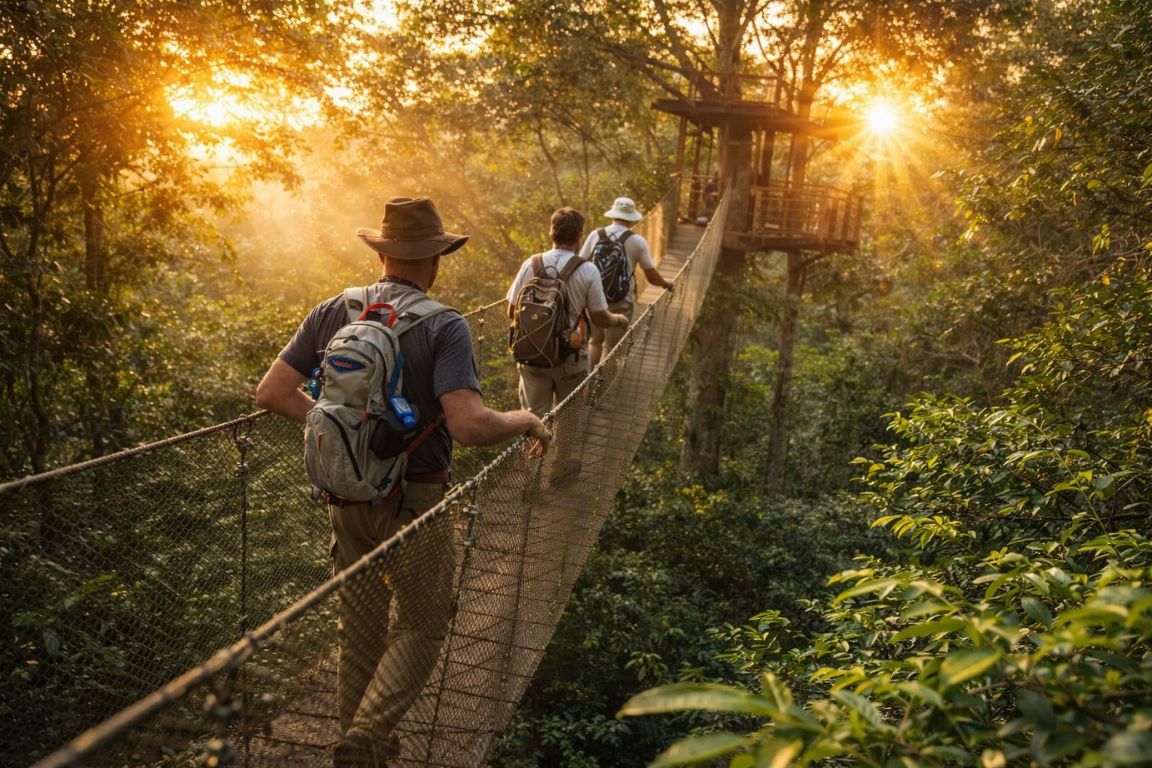 The Amazon has two distinct seasons that fundamentally change the experience.
Dry Season (June-November):
- Water levels drop 10-15 meters exposing beaches, sandbars, and land trails
- Forest hiking possible on trails that are underwater during wet season
- Wildlife concentrates around remaining water sources (better spotting)
- River dolphins easier to see in narrower, shallower channels
- Beaches appear for swimming and picnics (yes, safe swimming exists in certain areas)
- Temperatures slightly hotter (32-35°C) with less cloud cover
- Mosquitoes more aggressive (less water dilution concentrates populations)
- Peak tourism season (June-August especially) means higher prices and fuller lodges
Wet Season (December-May):
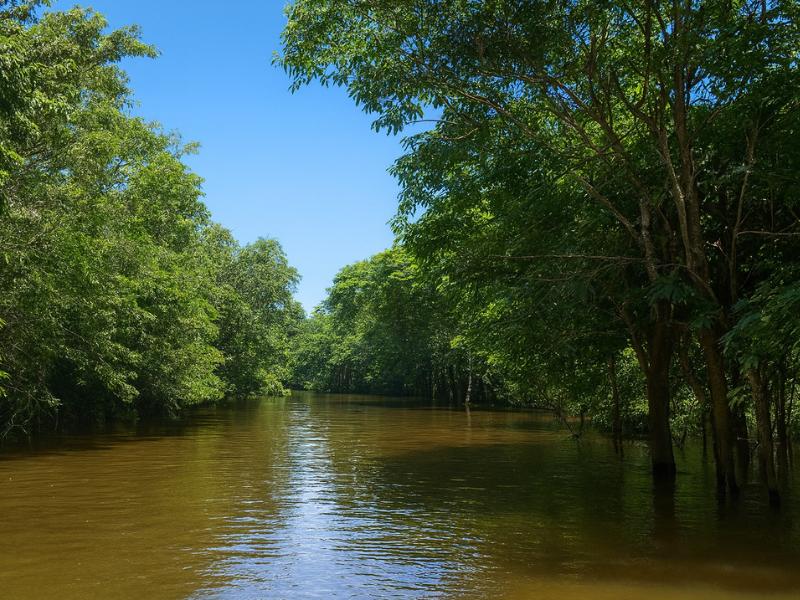
- Water levels rise 10-15 meters flooding vast forest areas (igapó – flooded forest)
- Canoe access deep into forest navigating between trees
- Unique flooded forest ecosystem with different species
- Wildlife dispersed (harder spotting as animals spread through flooded areas)
- No land hiking (trails underwater, beaches submerged)
- More rain (though “dry season” still gets rain – this is rainforest)
- Cooler slightly (30-32°C) with more cloud cover
- Fewer mosquitoes (water volume dilutes breeding areas)
- Lower prices and fewer tourists (except December-January holiday peak)
Which is Better? Dry season (July-October specifically) for most first-time visitors. The ability to hike rainforest trails, see wildlife concentrated around water, and experience beaches balances against higher prices and mosquitoes. Wildlife photographers and serious spotters strongly prefer dry season for visibility and access.
Wet season (February-April specifically) for flooded forest experience, canoe exploration, and budget travelers. The unique ecosystem and lower prices justify the trade-offs. Return visitors seeking different perspectives choose wet season.
Avoid Transition Periods (March-April, November-December): Water levels changing, weather unpredictable, mosquitoes peak during transitions, and you miss the benefits of both seasons while experiencing drawbacks of transitions.
The season you pick matters more than you’d think. Our breakdown of the best time to visit Brazilian Amazon tours shows you exactly what changes month to month.
Table: Brazilian Amazon Dry Season vs Wet Season Detailed Comparison
| Factor | Dry Season (Jun-Nov) | Wet Season (Dec-May) | Best Choice |
|---|---|---|---|
| Water Levels | Low (rivers drop 10-15m) | High (floods forest 10-15m) | Depends on desired activities |
| Forest Hiking | Excellent – trails accessible, extended treks possible | Impossible – trails underwater, canoe only | Dry season for hikers |
| Canoe Exploration | River channels only, less forest penetration | Deep forest access, navigate between trees | Wet season for flooded forest |
| Wildlife Spotting | Easier – animals concentrated at water sources | Harder – animals dispersed through flooded forest | Dry season for reliable sightings |
| Beaches/Swimming | Yes – sandbars and beaches exposed | No – everything underwater | Dry season for beach breaks |
| Temperature | Hotter (32-35°C), more direct sun | Slightly cooler (30-32°C), more cloud cover | Wet season marginally more comfortable |
| Rain Frequency | Less frequent (but still occurs – this is rainforest) | More frequent (daily afternoon storms common) | Dry season more predictable |
| Mosquitoes | Aggressive (concentrated populations) | Fewer (diluted by water volume) | Wet season for insect-sensitive |
| Prices | Higher (peak season Jul-Aug especially) | Lower (except Dec-Jan holidays) | Wet season for budget |
| Crowds | Fuller lodges (book 4-6 months ahead) | Quieter (book 2-3 months ahead) | Wet season for solitude |
| Photography | Better light, better wildlife access | Unique flooded forest perspectives | Dry season for wildlife, wet for landscapes |
| Best Months | July-October (optimal dry, post-rain clearing) | February-April (optimal wet, post-holiday availability) | Mission-dependent |
What Type of Brazilian Amazon Experience Should You Choose?
Recommended tours by season
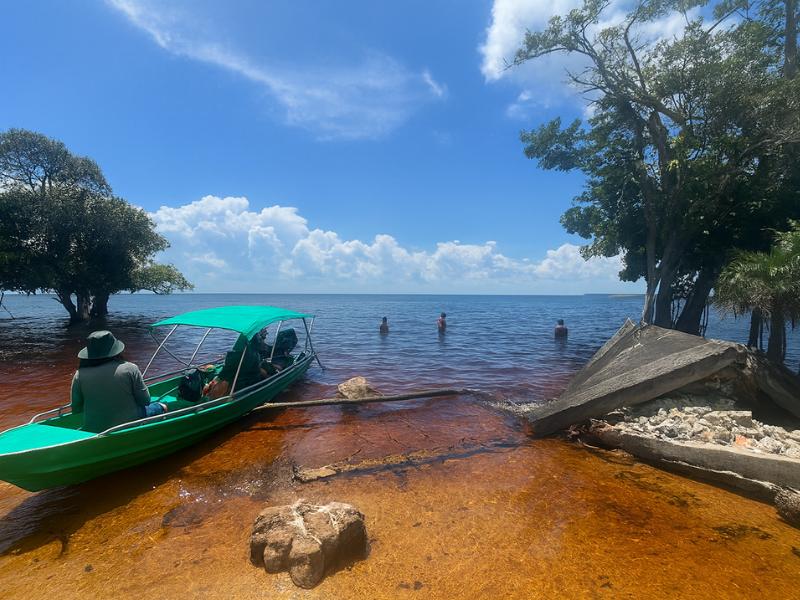
Manaus Jungle Trek: Amazonas & Anavilhanas Archipelago
8 hours from Manaus through Amazonas and the Anavilhanas Archipelago. A land-based day for June–November itineraries.
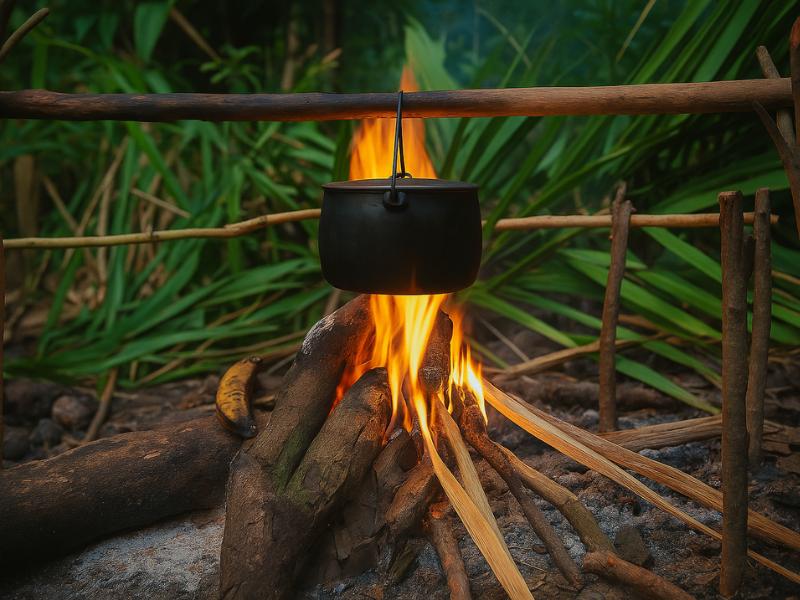
Amazon Kayak Expedition: 4 Days/3 Nights
4 days and 3 nights by kayak. A river itinerary for December–May dates when travel is mostly on the water.
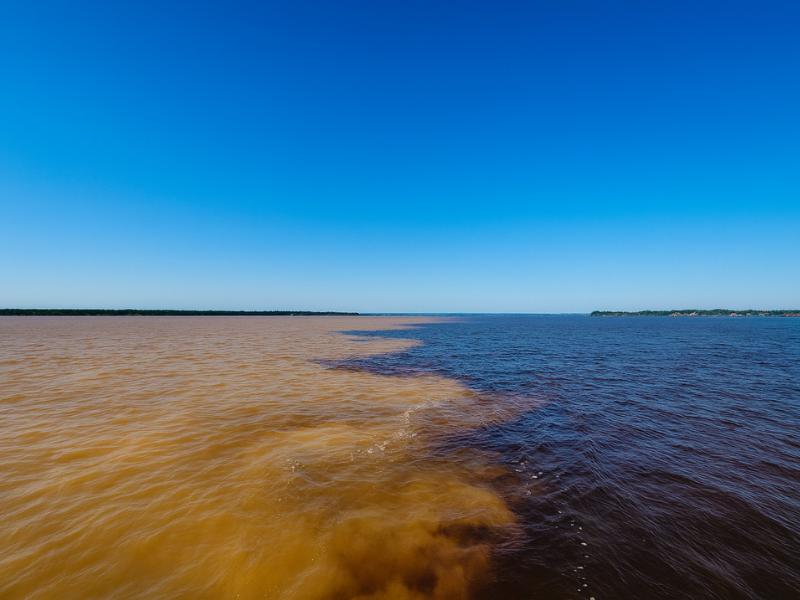
Amazon Tour: Meeting of the Waters & Pink Dolphins with Lunch
6 hours from Manaus, covering the Meeting of the Waters and pink dolphins, with lunch included.
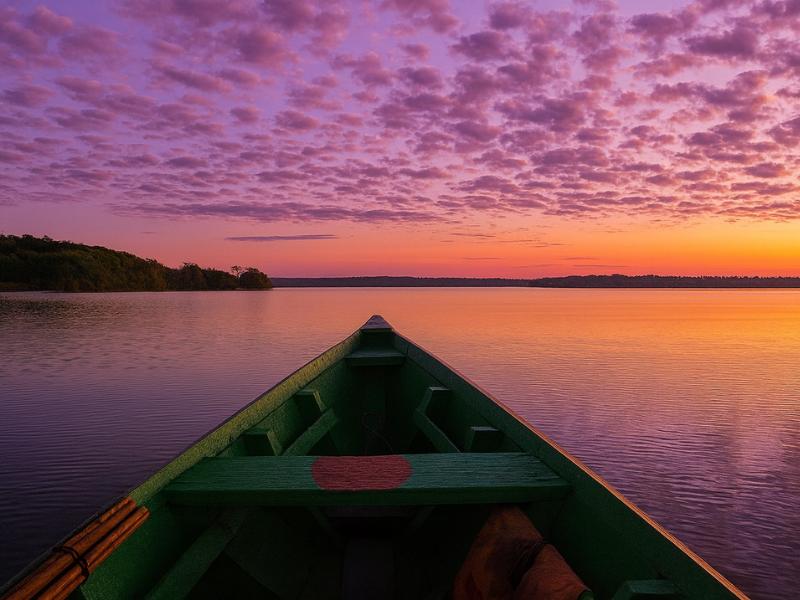
Amazon Jungle Tour: Overnight Rainforest Experience
48 hours overnight in the rainforest, between a single day outing and a full lodge week.
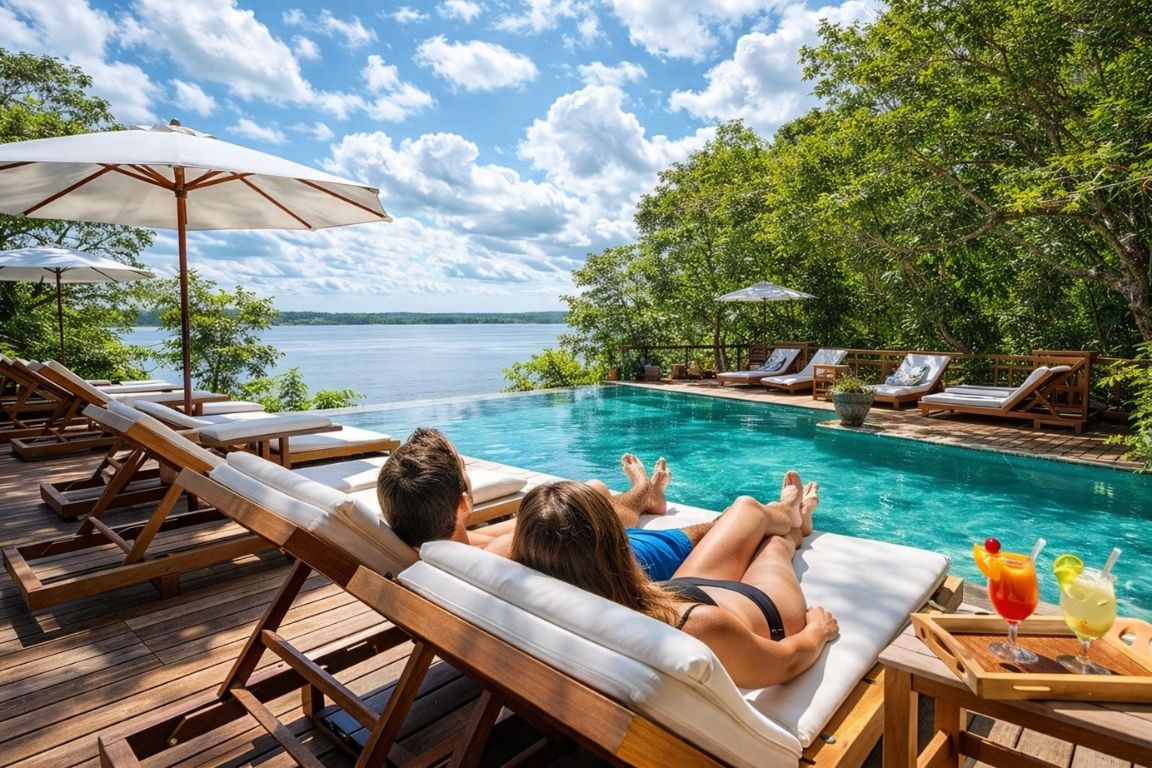
Jungle Lodges dominate Brazilian Amazon tourism. These permanent structures offer private rooms, electricity, bathrooms (usually shared, sometimes private), restaurant meals, and guided daily activities. They range from basic eco-lodges ($150-250/night all-inclusive) to upscale luxury lodges ($300-500+/night) with air conditioning, private bathrooms, and gourmet meals.
Lodge advantages: comfort, fixed base exploring different areas daily, better food, social atmosphere with other guests, reliable infrastructure. Lodge disadvantages: less mobile (same area entire stay), scheduled group activities, less “authentic jungle” feel with modern amenities.
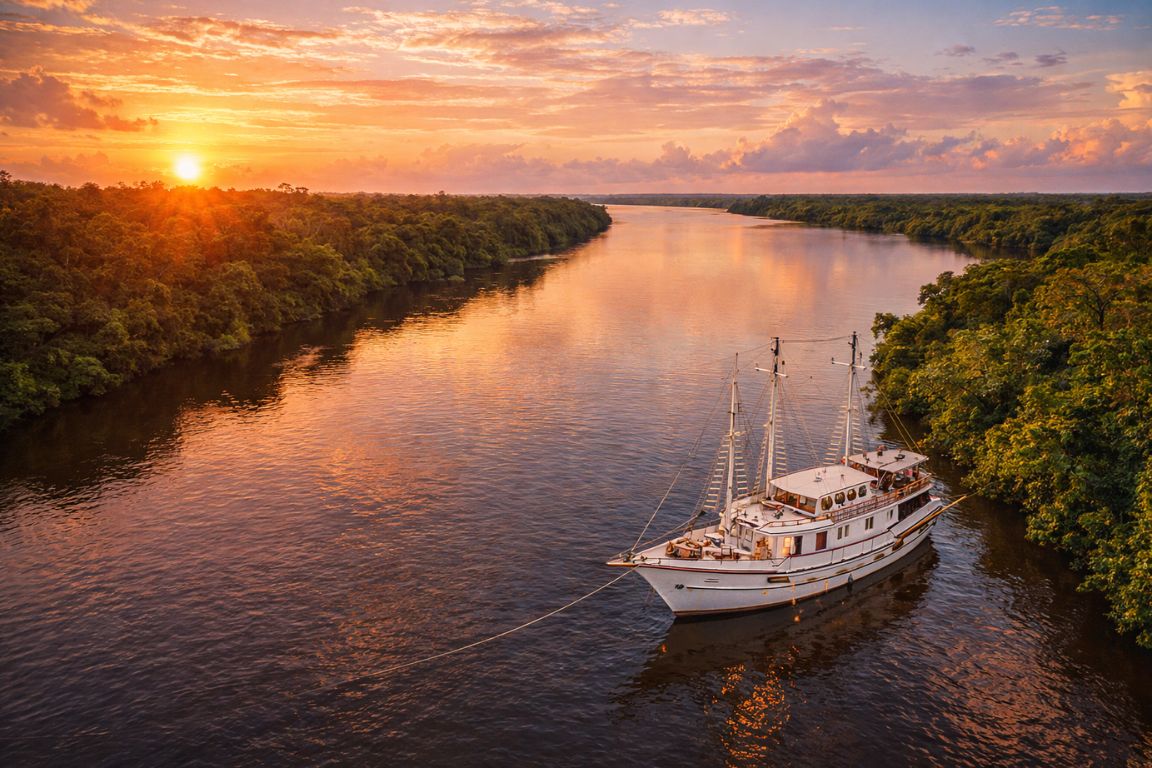
Riverboat Cruises move daily, covering more territory, sleeping aboard while traveling overnight. These range from basic regional boats with hammocks ($80-150/night) to comfortable tourist boats with cabins ($200-400/night) to luxury expedition vessels ($500-800+/night).
Riverboat advantages: cover vast distances, see multiple ecosystems, wake up in new locations, more river-focused wildlife (dolphins, birds), romantic sunset/sunrise from deck. Riverboat disadvantages: less forest hiking (mostly boat-based), shared bathrooms (except luxury), motion sensitivity issues, limited personal space.
Budget Jungle Camps offer basic hammock or tent accommodation ($50-100/night including basic meals and guide). These provide maximum “jungle” immersion with minimal comfort.
Budget camp advantages: authentic experience, lower cost, often reach more remote areas, forced simplicity creates focus. Budget camp disadvantages: physical discomfort (heat, insects, basic facilities), not suitable for older travelers or those with health considerations, limited safety infrastructure.
Community-Based Tourism stays with indigenous or traditional communities. Variable comfort, usually basic, with cultural immersion as primary goal ($80-200/night including meals, cultural activities, and accommodation).
Community advantages: authentic cultural exchange, economic benefit to communities, unique perspectives. Community disadvantages: very basic facilities, significant cultural adaptation required, language barriers, ethical considerations about tourism impact.
Day Tours from Manaus exist but provide minimal Amazon experience – you see the Meeting of Waters, maybe quick forest walk, return to city. Only acceptable if absolutely time-constrained or testing interest before committing to multi-day experience.
What Should Your Brazilian Amazon Booking Timeline Actually Look Like?
6-8 Months Before (for peak dry season July-August):
- Research lodges, read recent reviews, decide on experience type
- Book flights to Brazil (São Paulo or Rio gateway typically, then Manaus connection)
- Reserve lodge or riverboat (best properties fill 6+ months ahead for peak season)
- Confirm yellow fever vaccination (recommended, not required for entry; takes 10 days to become effective)
3-4 Months Before (for shoulder season or wet season):
- Same as above but shorter lead time acceptable
- Book domestic flights to Manaus (prices increase closer to dates)
- Arrange travel insurance with medical evacuation coverage
- If prescribed, start malaria medication on the schedule provided for that specific drug and complete the full course.
6-8 Weeks Before:
- Confirm all bookings (lodges, flights, transfers)
- Purchase gear (rain jacket, hiking boots, dry bags, insect protection)
- Complete any remaining vaccinations (Hepatitis A, Typhoid recommended)
- Finalize detailed itinerary
2-4 Weeks Before:
- Reconfirm domestic flights (Brazilian airlines sometimes change schedules)
- Pack and test all gear (don’t discover broken rain jacket in the Amazon)
- If prescribed, start malaria medication on the schedule provided for that specific drug and complete the full course.
- Download offline maps and lodge contact information
1 Week Before:
- Final weather check (doesn’t change plans but helps packing adjustments)
- Notify bank of Brazil travel (avoid card blocks)
- Print backup copies of all reservations (lodge wifi is unreliable)
- Charge all electronics and cameras
Critical Timeline Note: Waiting until 4-6 weeks before dry season travel means best lodges are fully booked. You’ll get availability, but at second-tier properties or less desirable dates. Budget-conscious travelers can sometimes score last-minute deals (2-3 weeks before wet season departures) when lodges discount unfilled space, but this gambles with availability.
How Much Should You Actually Budget for a Brazilian Amazon Trip?
Budget Breakdown (7-day trip, per person):
International Flights:
- From USA: $600-1,200 (São Paulo/Rio gateway)
- From Europe: $700-1,400 (similar gateway)
- From Australia: $1,500-2,500+ (long haul)
Domestic Flights:
- São Paulo/Rio to Manaus: $150-350 round-trip
- Advance booking saves $100-200 per ticket
- Add $50-100 for luggage on budget Brazilian carriers
Lodge/Tour Package (4-5 days):
- Budget jungle camps: $400-750 total (4 days all-inclusive)
- Mid-range lodges: $800-1,400 total (4 days all-inclusive)
- Upscale lodges: $1,500-2,500 total (4 days all-inclusive)
- Luxury lodges: $2,500-4,000+ total (4 days all-inclusive)
- “All-inclusive” means accommodation, meals, guided activities, transfers from/to Manaus
Manaus Accommodation (2-3 nights):
- Budget: $30-60 per night (hostel/basic hotel)
- Mid-range: $60-120 per night (comfortable hotel)
- Upscale: $120-250 per night (quality hotel with amenities)
Meals in Manaus:
- Budget: $20-35 daily (local restaurants, street food)
- Mid-range: $35-60 daily (decent restaurants)
- Upscale: $60-100+ daily (nice dining)
Activities in Manaus:
- Meeting of Waters boat tour: $30-50
- Teatro Amazonas visit: $10-15
- Market visits: free-$10
- Total typically: $50-100
Miscellaneous:
- Travel insurance: $50-150 (essential with medical evacuation)
- Vaccinations: $0-200 (yellow fever often free at travel clinics, others vary)
- Gear purchases: $100-300 (if buying rain jacket, boots, dry bags)
- Tips at lodge: $50-100 (customary for guides and staff)
- Souvenirs: $50-200 (handicrafts, local products)
Total 7-Day Budget Estimates:
- Budget traveler: $1,500-2,200 (US-based, economy throughout)
- Mid-range traveler: $2,500-4,000 (comfortable throughout)
- Upscale traveler: $4,000-6,500+ (quality everything)
These assume US-based traveler. Europeans add flight difference. Brazilians subtract international flight, dramatically reducing total ($800-2,000 for week).
Table: Brazilian Amazon Trip Budgeting by Traveler Type
| Category | Budget Traveler | Mid-Range Traveler | Upscale Traveler | What You Get | Biggest Differences |
|---|---|---|---|---|---|
| International Flight | $600-900 (economy, long layovers) | $800-1,200 (economy, better routes) | $1,200-2,500 (premium economy/business) | Budget: Uncomfortable but functional | Comfort, time, convenience |
| Domestic Flights | $150-250 (budget carriers, luggage extra) | $200-350 (full-service, luggage included) | $250-400 (flexibility, preferred times) | Same destinations, different comfort | Baggage allowance, schedule flexibility |
| Lodge (4 days) | $400-750 (basic camps, hammocks/simple rooms) | $800-1,400 (comfortable lodges, private rooms often) | $1,500-2,500+ (luxury, AC, private bath, gourmet) | Budget: Jungle immersion, discomfort. Upscale: Comfort, amenities | Physical comfort, food quality, bathroom situation |
| Manaus Nights | $90-180 (3 nights hostel/basic) | $180-360 (3 nights comfortable hotel) | $360-750 (3 nights quality hotel) | Same city, vastly different rest quality | Sleep quality, safety, convenience |
| Meals Manaus | $60-105 (local spots, budget) | $105-180 (decent restaurants) | $180-300 (quality dining) | Local food vs international/upscale | Variety, ambiance, quality |
| Activities | $50-80 (DIY, skip expensive) | $80-150 (selective tours) | $150-300 (all available tours) | See key sights vs comprehensive | Depth, guide quality, exclusive access |
| Miscellaneous | $200-400 (minimal gear, basic insurance) | $300-600 (proper gear, good insurance, tips) | $500-1,000 (premium everything, generous tips) | Functional vs optimal | Preparation quality, staff appreciation, contingency |
| TOTAL 7 Days | $1,550-2,665 | $2,473-4,240 | $4,095-7,250 | Budget: Authentic but challenging. Upscale: Comfortable, comprehensive | Physical comfort, breadth of experience, stress level |
What Health Preparations Do You Actually Need for the Brazilian Amazon?
Strongly Recommended:
- Yellow fever vaccination (CDC-recommended for the Amazon region, not required for entry to Brazil; get it 10+ days before travel for effectiveness, valid lifetime, available at travel clinics often free)
- Hepatitis A vaccination (food/water borne, 2-dose series)
- Typhoid vaccination (food/water borne, shot or pills)
- Routine vaccinations current (tetanus, measles, etc.)
- Comprehensive travel insurance with medical evacuation (non-negotiable)
Recommended for Remote Areas:
- Malaria prophylaxis (consult travel doctor, options include Malarone, doxycycline, Lariam)
- Malaria prevention depends on the exact itinerary and individual health. Distance from Manaus is not a reliable safety cutoff. Discuss the route, activities and accommodation with a travel-health clinician and follow the prescribed course.
- Remote lodges (100km+ from Manaus) have higher risk
- Prophylaxis has side effects – weigh risk vs benefit with doctor
Medical Kit Essentials:
- Prescription medications (bring 2x what you need, keep in original containers)
- Anti-diarrheal (Imodium – not if, but when)
- Oral rehydration salts (crucial for dehydration)
- Antibiotics (doctor-prescribed for traveler’s diarrhea if severe)
- Antihistamine (insect bites, allergic reactions)
- Pain reliever/anti-inflammatory (ibuprofen, acetaminophen)
- Wound care (bandages, antibiotic ointment, butterfly closures)
- Antifungal cream (humidity creates skin issues)
- Insect repellent with 30%+ DEET (non-negotiable, bring multiple bottles)
- Sunscreen SPF 50+ (yes, despite jungle canopy – river reflections burn)
Pre-Existing Conditions:
- Consult doctor 2-3 months before travel
- Bring medication documentation
- Research nearest medical facilities to lodge (some are 4-6 hours from help)
- Verify travel insurance covers pre-existing conditions
- Consider lodges closer to Manaus if mobility or immediate medical access matters
Water Safety:
- Drink only bottled or treated water
- Lodges provide safe water but verify
- Avoid ice unless confident of water source
- River water is NOT safe for drinking even filtered (parasites)
Food Safety:
- Eat hot, freshly cooked food
- Avoid raw vegetables unless you can peel them
- Lodge kitchens generally safe, but street food in Manaus requires caution
- Traveler’s diarrhea affects 30-50% of Amazon visitors – it’s normal, prepare for it
This is an individual medical decision. A tour booking cannot establish health suitability; bring the actual route and sleeping arrangements to your clinician.
What Should You Actually Pack for the Brazilian Amazon?
The golden rule: pack light but pack right. You’re in 30-35°C heat with 80-90% humidity where nothing dries. Every item must earn its space.
We’ve put together a detailed packing list for the Brazilian Amazon tours based on what actually works in the jungle – not just what the brochures say.
Clothing (everything quick-dry synthetic, ZERO cotton):
- 3-4 quick-dry t-shirts (not cotton – cotton stays wet, breeds bacteria, makes you miserable)
- 2 quick-dry long-sleeve shirts (sun/insect protection)
- 2 quick-dry pants with zip-off legs (convertible to shorts)
- 1 rain jacket (lightweight, packable, this gets used daily)
- 1 rain pants (for heavy rain hikes)
- 5-6 underwear (quick-dry only)
- 3-4 pairs quick-dry socks
- 1 bathing suit
- 1 light fleece (evenings on boat can cool to 22-24°C)
- Wide-brimmed hat (sun protection essential)
- Bandana (sweat management, multiple uses)
Footwear:
- Broken-in hiking boots (waterproof, ankle support for muddy trails)
- Water shoes or sport sandals (for boat, swimming, wet landings)
- Flip-flops (lodge/boat use only, not for jungle)
Critical Gear:
- Headlamp with red light (nighttime activities, won’t blind night vision)
- Dry bags (10L and 20L sizes, protecting cameras and electronics from humidity/rain)
- Backpack rain cover
- Binoculars (8×42 or 10×42 for wildlife)
- Camera with telephoto lens if serious about photography
- Portable charger/power bank (lodges have limited charging access)
- Universal adapter (Brazil uses 127V or 220V, type N plugs)
Toiletries/Health:
- DEET 30%+ insect repellent (bring 2-3 bottles, 100ml each)
- Sunscreen SPF 50+ (2 bottles minimum)
- Anti-fungal cream or powder
- Wet wipes (showers limited, these are crucial)
- Toilet paper (not provided everywhere, bring full roll)
- Hand sanitizer
- Lip balm with SPF
- Basic medical kit (see health section)
Documents:
- Passport (valid 6+ months)
- Yellow fever vaccination certificate (recommended to carry, not required for entry to Brazil)
- Travel insurance details (print backup, save offline)
- Lodge reservation confirmations (print backup)
- Emergency contacts
- Credit cards (2 different types – Visa and Mastercard both, in case one doesn’t work)
- Cash (USD or Brazilian Real, $200-300 for tips and emergencies)
Leave Home:
- Cotton anything (won’t dry, breeds bacteria)
- Jewelry (unnecessary, could be lost)
- Expensive watches (humidity damages them)
- Hair dryer (humidity is 80-90%, pointless)
- Excessive electronics (you’ll have minimal connectivity anyway)
- Multiple shoes beyond the three types listed
- Books (bring one, use Kindle, lodges sometimes have exchanges)
Pro Tips:
- Pack in compression bags (saves space, protects from moisture)
- Put all electronics in dry bags even inside luggage
- Bring ziplock bags (protecting small items from humidity)
- Test all gear before leaving (discover broken rain jacket at home, not in jungle)
- Wear your hiking boots on the plane (saves luggage space, ensures you have them if luggage lost)
What Brazilian Amazon Tours and Activities Should You Expect?
Standard Activities (included at all lodges/boats):
Rainforest Hikes – 2-4 hour guided treks on maintained trails. Guides identify medicinal plants, explain forest ecology, point out insects and small animals. These are educational, not physically extreme, though humidity and heat challenge fitness. Dry season offers more extensive trail access.
Canoe Excursions – Silent paddling through narrow channels (igapós) observing wildlife. Wet season allows deep forest penetration between flooded trees. Dawn and dusk excursions target active wildlife periods. These are peaceful, non-strenuous, best for bird and caiman spotting.
Piranha Fishing – Tourist activity but fun. Guides provide simple rods, bait, instruction. You’ll catch small piranhas (they’re everywhere). Catch-and-release or cook for lunch depending on lodge policy. Not thrilling fishing but cultural experience.
Night Spotting – Boat or canoe after dark with flashlights spotting caiman eyes (reflect red), nocturnal birds, and occasional mammals. Guides explain nighttime ecosystem. Wear dark clothing (less visible), bring headlamp with red light setting.
Indigenous Community Visits – Structured visits to indigenous or traditional communities. These range from authentic cultural exchanges to staged tourist performances depending on community and lodge relationship. Ethical concerns exist about tourism impact – choose lodges with established, respectful community partnerships.
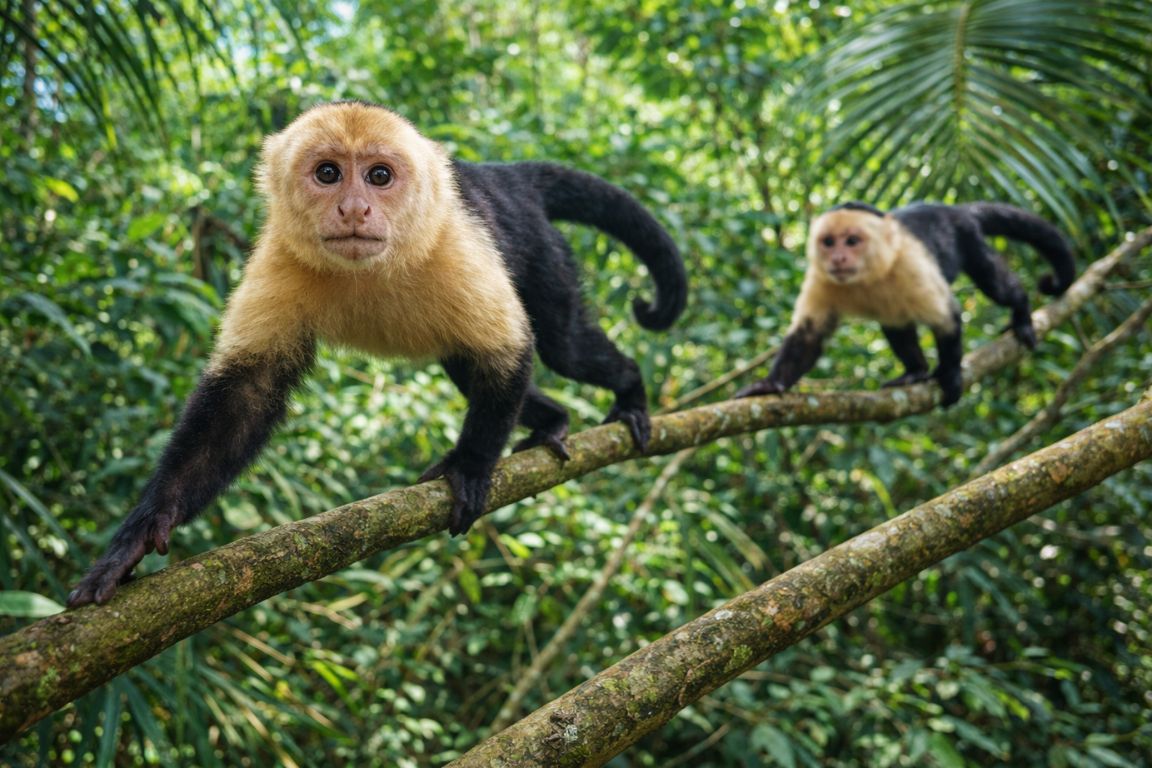
Wildlife Observation – Constant activity throughout all excursions. Guides spot animals, point out signs, explain behaviors. Morning (5:30-7:30am) and evening (5-7pm) offer best wildlife activity. Patience required – this isn’t zoo where animals appear on command.
Dolphin Watching – Pink river dolphins (boto) and gray dolphins appear in certain areas. Swimming with dolphins is controversial (stresses animals, some operations unethical). Responsible observation from boats recommended.
Survival Skills – Some lodges teach basic jungle survival: finding water, building shelter, making fire, identifying edible plants. These are educational demonstrations, not survival courses, but interesting cultural context.
Fishing Expeditions – Beyond piranha fishing, some lodges offer serious fishing for peacock bass and other species. These are usually extra-cost add-ons for fishing enthusiasts.
Canopy Walks/Towers – A few lodges have canopy walkways or observation towers providing forest mid-level views. These showcase different ecosystem layers and bird species.
Need a recommendation? Here are the best Amazon jungle tours that consistently get it right – from budget to luxury.
FAQs
Malaria prevention depends on the exact itinerary and individual health. Distance from Manaus is not a reliable safety cutoff. Discuss the route, activities and accommodation with a travel-health clinician and follow the prescribed course.
Can I visit the Brazilian Amazon with children? Yes, but carefully consider child’s age, heat tolerance, and comfort with wildlife/insects. Children 8+ typically enjoy Amazon experiences if properly prepared. Under 8 can struggle with heat, boat transfers, and limited entertainment. Choose family-friendly lodges with shorter excursions, swimming areas, and flexibility. Avoid remote lodges with extended boat transfers for young children.
No natural-water swimming location can be guaranteed safe. Currents, underwater hazards, wildlife and infection risks vary. Follow local restrictions and qualified guidance; choosing a tour does not require entering the water.
How reliable is internet/cell service in the Amazon? Essentially non-existent at lodges. Manaus has normal cell service. Once at lodges, expect zero connectivity – no cell signal, no wifi, or extremely limited wifi (WhatsApp messages only) at reception. Plan for complete disconnection. This is feature not bug for many visitors. Bring downloaded entertainment, inform family of communication blackout.
What wildlife can I realistically expect to see? Highly likely: Various bird species (toucans, parrots, herons, egrets), caimans, river dolphins, multiple monkey species (howler, squirrel, capuchin), sloths (if lucky), insects and spiders, reptiles. Possible but not guaranteed: Tapirs, anteaters, capybaras, more elusive mammals. Very unlikely: Jaguars (extremely rare sightings), anacondas (exist but rarely seen), poison dart frogs (specific locations). Set realistic expectations – the ecosystem is incredible regardless of specific animal checklist.
Should I book directly with lodges or through tour operators? Direct booking works if you’ve thoroughly researched specific lodge, understand what’s included, and comfortable with communication (some Brazilian lodges have limited English). Tour operators provide value through vetting properties, handling complex logistics, providing backup support if issues arise, and sometimes better prices through volume. First-timers benefit from reputable tour operator handling details.
Can vegetarians/vegans eat well in the Amazon? Lodge food is traditionally meat/fish heavy but most accommodate dietary restrictions with advance notice (when booking, not upon arrival). Vegetarians manage well – rice, beans, vegetables, fruits abundant. Vegans face challenges (limited options, repetitive meals) but are possible with clear advance communication. Manaus has vegetarian restaurants for pre/post lodge meals.
What’s the worst thing about Brazilian Amazon trips that people don’t mention? The heat and humidity are relentless and exhausting. You’re constantly sweating, clothes never fully dry, energy drains faster than you expect, and some people struggle to sleep well in humid heat. This isn’t occasional discomfort – it’s 24/7 for your entire trip. If you’re heat-sensitive or uncomfortable sweating constantly, the Amazon will challenge you regardless of how excited you are about wildlife and rainforest. This reality filter prevents many disappointing trips.
Glossary
Igapó: Flooded forest ecosystem occurring during wet season when river water rises 10-15 meters, flooding vast forest areas and creating navigable waterways between trees, supporting unique wildlife adapted to seasonal flooding.
Meeting of Waters: Natural phenomenon near Manaus where black Rio Negro and brown Amazon River (Rio Solimões) flow side-by-side for 6km without mixing due to different densities, temperatures, and speeds – signature Manaus tourist attraction.
Ferragosto: Not Brazilian but relevant – August peak season when European tourists flood Brazil, increasing prices and reducing availability (borrowed term but applies to August tourism surge).
Boto: Pink river dolphin (Amazon river dolphin), freshwater species endemic to Amazon basin, notable for pink coloration in adults, curious behavior, and cultural significance in Amazonian folklore.
Caiman: Alligator-like reptile common throughout Amazon, spotted during night excursions when eyes reflect flashlight red, generally small (1-2 meters) and harmless to humans unless provoked.
Lodge Transfer: Boat journey from Manaus to jungle lodge, ranging 1-6 hours by speedboat depending on lodge distance, typically included in package price, marking transition from city to jungle.
Dry Season: June-November period when Amazon water levels drop 10-15 meters exposing beaches and land trails, offering better wildlife spotting and forest hiking despite higher temperatures and mosquitoes.
Wet Season: December-May when Amazon river levels rise 10-15 meters flooding vast forest areas, enabling canoe exploration deep into igapó but reducing land access and dispersing wildlife.
All-Inclusive Package: Lodge pricing including accommodation, all meals, guided activities, and Manaus-lodge transfers, excluding international flights, domestic flights to Manaus, tips, and personal expenses.
Yellow Fever Certificate: Proof of vaccination the CDC recommends for the Amazon region, not a mandatory entry requirement for Brazil. Get it 10+ days before travel for effectiveness; valid for life once given.
Written by a Brazilian Amazon travel specialist with extensive experience planning trips across all seasons, direct relationships with Manaus-based lodges and tour operators, understanding of realistic timelines and budgets for international travelers, knowledge of common planning mistakes and how to avoid them, and commitment to honest guidance about Amazon travel challenges alongside its incredible rewards. Date: December 29, 2025.