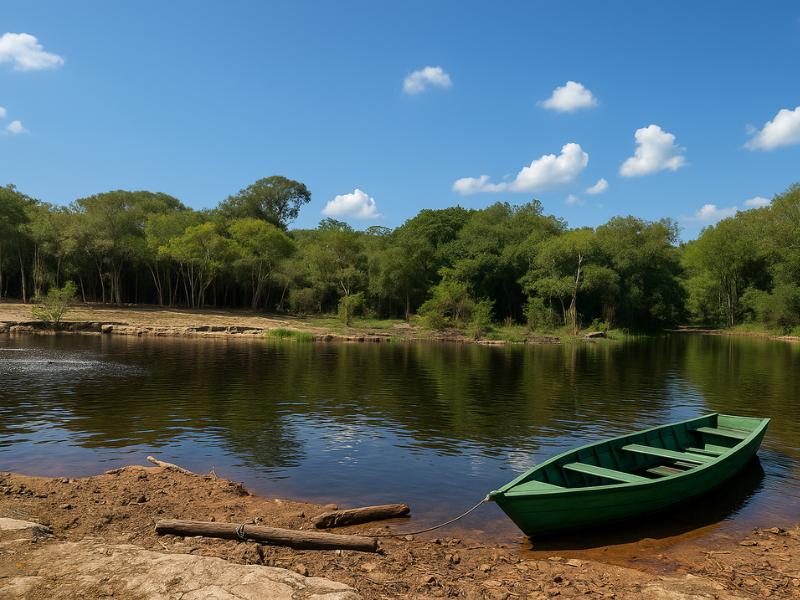
Luxury Brazilian Amazon Jungle Lodges
Are luxury Amazon lodges worth the price? Discover what $400–800/night really buys—comfort, service, and sleep—not better wildlife—and who should upgrade vs go mid-range.
Last updated: March 10, 2026
Compare a verified air-conditioned cabin with the premium features described in this guide. No verified luxury-suite package is assumed. Explore Three-Day Amazon Wildlife And Culture Adventure ↗
Planning note: price ranges, sample schedules and percentage comparisons below are illustrative editorial estimates, not live quotes or measured predictions. The linked itineraries state their own duration, location, inclusions and restrictions; wildlife sightings are never guaranteed.
What Actually Defines “Luxury” in Brazilian Amazon Context?
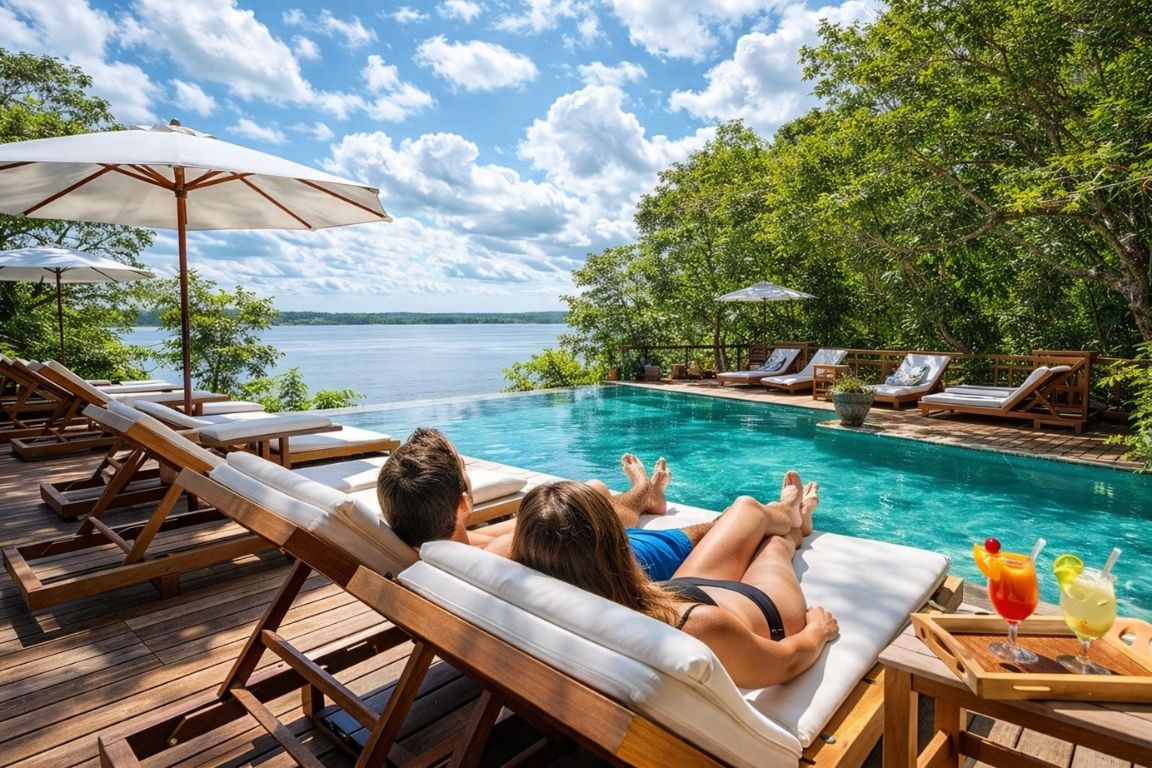
Amazon “luxury” differs fundamentally from conventional luxury hotels. Five-star Amazon properties won’t match Four Seasons comfort – you’re still in rainforest 100+ kilometers from cities where infrastructure is inherently limited. Understanding realistic luxury standards prevents disappointment.
True Luxury Features in Amazon Context:
Air Conditioning (Partial or Full): This is THE luxury differentiator. Mid-range lodges provide fans only. Luxury lodges offer:
- Option A: Partial AC (running during sleep hours 10pm-6am, electricity hours 6-9am and 6-10pm)
- Option B: Full AC (24-hour power, always running if desired)
The difference is profound: sleeping in 28-30°C with fans (uncomfortable, sweaty, poor rest) versus 22-24°C with AC (comfortable, dry, restorative sleep). After hiking in 33°C heat all day, returning to AC room for midday siesta is transformative. This single feature often justifies luxury pricing for heat-sensitive travelers.
Private Ensuite Bathrooms with Premium Amenities: Mid-range lodges offer mix of ensuite and quality shared bathrooms. Luxury lodges guarantee:
- Spacious private bathrooms (every room)
- Hot water 24 hours (not just morning/evening)
- Quality toiletries (shampoo, conditioner, soap, sometimes specialty items)
- Western toilets with good water pressure
- Sometimes rainfall showers or soaking tubs
- Daily towel changes (mid-range often limits to 2x weekly)
The convenience and privacy matter significantly, especially for couples, families, or those with bathroom-frequency medical conditions.
Spacious Accommodations: Mid-range: 15-25 square meter rooms, functional but compact Luxury: 35-60+ square meter suites or standalone bungalows
Extra space includes:
- Separate sitting areas with furniture
- Private decks or balconies with hammocks
- Quality hardwood furniture versus basic
- Ample storage (closets, shelves, hooks)
- Sometimes screened outdoor shower areas
- Occasional plunge pools or jacuzzis (rare but exists)
Space creates comfort – you’re not just sleeping in room, you’re living there during rest periods.
Gourmet Cuisine and Dining Experience: Mid-range: Good quality Brazilian food, adequate variety, buffet service, predictable menu rotation Luxury: Chef-prepared meals, extensive variety, plated multi-course service, international options alongside Brazilian, wine lists, dietary accommodations seamless
Specific improvements:
- Fresh bread and pastries baked daily (versus pre-made)
- Multiple entrée choices each meal (versus single option)
- Wine pairings and cocktails included or available (versus beer/house wine only)
- Fresh herbs, complex preparations, presentation quality
- Special dietary needs (vegan, gluten-free, allergies) handled expertly without advance notice stress
After 4-5 days, meal quality significantly affects morale. Luxury dining prevents food fatigue mid-range travelers commonly report by Day 4-5.
Expert Naturalist Guides with Advanced Training: Mid-range: Bilingual guides with competent knowledge, 1:8-12 guest ratios Luxury: Expert guides often with advanced degrees (biology, ecology), specialized training (birding certifications, primate research), published researchers sometimes, 1:4-6 guest ratios or private guide options
The guide quality difference appears in:
- Spotting cryptic species casual guides miss (sloths, camouflaged birds)
- Answering complex ecological questions beyond guidebook facts
- Anticipating animal behavior based on research experience
- Providing specialized expertise (photographers getting composition advice, birders hearing detailed call analysis)
- Individual attention (small groups or private guides)
For serious wildlife enthusiasts, guide expertise alone justifies luxury pricing.
Small Group Sizes and Personalization: Mid-range: 8-12 guests per departure, group activities, fixed schedules Luxury: 4-8 guests maximum, often smaller (couples on private honeymoon-style departures), highly customized programming
Benefits:
- Silent small groups see more wildlife (less noise scaring animals)
- Individual interests accommodated (photographer wants extra dawn time, family needs kid-friendly modified pace)
- Flexibility in timing and activity selection
- Intimate atmosphere versus crowded group dynamics
- Personal relationships with guides and staff
Premium Infrastructure and Design: Beyond rooms, overall property quality:
- Architecturally designed structures (not just functional buildings)
- Beautiful common areas (lounges, libraries, observation decks)
- Quality construction materials (hardwoods, thoughtful design)
- Well-maintained grounds (landscaping, paths, aesthetic attention)
- Sometimes pools, massage services, photography equipment available
- Reliable electricity infrastructure (generators, solar, battery systems)
- Screened and sealed against insects (versus basic screens with gaps)
These details create resort-level experience rather than rustic camp feeling.
Table: Luxury vs Mid-Range Amazon Lodges Feature Comparison
| Feature | Mid-Range ($200-350/night) | Luxury ($400-800/night) | Impact on Experience | Worth Premium Cost? |
|---|---|---|---|---|
| Air Conditioning | Fans only (28-30°C rooms) | Partial or full AC (22-24°C) | MASSIVE – sleep quality, heat recovery | YES – if heat-sensitive |
| Bathroom | Mix private/shared, limited hot water | Always private, 24hr hot water, premium | High – convenience and comfort | YES – for most |
| Room Size | 15-25 sqm, functional | 35-60+ sqm, spacious suites | Moderate – living space comfort | MAYBE – nice but not critical |
| Food Quality | Good Brazilian, adequate variety | Gourmet chef-prepared, extensive variety | High – affects 4-5 day morale | YES – for extended stays |
| Wine/Alcohol | Basic beer/house wine | Premium wines, cocktails, selection | Low-Moderate – nice addition | MAYBE – depends on drinking |
| Guide Expertise | Competent bilingual (good) | Expert specialists (outstanding) | MASSIVE – wildlife spotting, learning | YES – for serious enthusiasts |
| Group Size | 8-12 guests typical | 4-6 guests maximum | High – wildlife viewing, flexibility | YES – significantly better |
| Customization | Fixed schedule, limited flexibility | Highly personalized, adaptive | Moderate-High – meets individual needs | MAYBE – depends on preferences |
| Design/Aesthetics | Functional, adequate | Beautiful, architectural | Low – nice but superficial | NO – doesn’t affect core experience |
| Service Level | Good, attentive | Exceptional, anticipatory | Moderate – comfort and convenience | MAYBE – pleasant but not essential |
| Wildlife Access | Location-dependent (can be excellent) | Location-dependent (usually excellent) | Critical – but not determined by luxury | Location matters more than luxury |
The Pattern: Luxury dramatically improves comfort (AC, bathrooms, space, food) and guide quality (expertise, ratios), but doesn’t change fundamental wildlife outcomes which depend on location and luck.
How Much Do Luxury Amazon Lodges Actually Cost?
Be prepared for substantial premiums over mid-range options.
If you’re flying into Manaus, check out our guide to Brazilian Amazon tours from Manaus – it’s the main hub with the most tour options.
Luxury Lodge Pricing (Per Person, All-Inclusive):
- Budget luxury (if such thing exists): $350-450/night
- Standard luxury: $450-600/night
- Premium luxury: $600-800/night
- Ultra-luxury (rare, expedition vessels or exclusive camps): $800-1,200+/night
All-Inclusive Coverage (Luxury Standard):
- Accommodation in premium suite/bungalow
- All meals including snacks (gourmet chef-prepared)
- All standard activities (hikes, canoes, night excursions, cultural visits)
- Transfers Manaus to/from lodge
- Professional bilingual naturalist guides
- Park fees
- Basic alcoholic beverages (beer, house wine, basic cocktails)
- Sometimes: Premium alcohol, specialty activities, massage services, private guides
What’s Still Extra:
- International and domestic flights
- Manaus hotel nights
- Tips for guides and staff ($15-20 per person per day recommended at luxury level)
- Specialty activities sometimes (serious sport fishing, overnight camping, helicopter transfers if available)
- Premium imported alcohol beyond house selections
- Laundry services
- Souvenirs
Total Trip Cost Calculation (5-Day/4-Night Package):
Mid-Range Scenario:
- Lodge (4 nights): $1,200 (at $300/night)
- Domestic flights: $300
- Manaus hotels (2 nights): $200
- Meals in Manaus: $80
- Tips: $60
- Insurance: $100
- Gear: $150
- Total: $2,090
Luxury Scenario:
- Lodge (4 nights): $2,400 (at $600/night)
- Domestic flights: $300 (same)
- Manaus hotels (2 nights): $350 (upgrading to better hotels)
- Meals in Manaus: $150 (better restaurants)
- Tips: $80
- Insurance: $100 (same)
- Gear: $150 (same)
- Total: $3,530
Premium Over Mid-Range: $1,440 (69% more expensive)
What That $1,440 Buys:
- Air conditioning (transforms sleep and midday rest)
- Gourmet meals (prevents food fatigue)
- Expert guides (spots more wildlife, teaches deeper)
- Smaller groups (4-6 vs 10-12, better viewing)
- Spacious private suites (comfort between activities)
- Premium service (anticipates needs, smooths logistics)
Value Assessment: Is 69% more cost worth 40-60% better comfort and service? Depends entirely on:
- Your budget flexibility ($1,440 significant or marginal sum?)
- Comfort importance (does AC and gourmet food dramatically affect your enjoyment?)
- Once-in-lifetime vs repeatable (special occasion justifies luxury, regular travel doesn’t)
- Heat sensitivity (age, health, personal tolerance – luxury AC is game-changer for some, unnecessary for others)
Table: Luxury Amazon Lodge Total Cost Breakdown
| Cost Category | Budget | Mid-Range | Luxury | Ultra-Luxury |
|---|---|---|---|---|
| Lodge (4 nights) | $600-900 | $1,200-1,400 | $2,000-2,800 | $3,200-4,800 |
| Domestic Flights | $250-350 | $250-350 | $250-350 | $250-500 (or helicopter) |
| Manaus Hotels (2 nights) | $100-180 | $180-250 | $300-400 | $400-600 |
| Meals in Manaus | $40-80 | $80-120 | $120-200 | $200-350 |
| Activities in Manaus | $20-50 | $50-100 | $100-200 | $150-300 |
| Tips (4 days) | $40-60 | $60-80 | $80-120 | $120-200 |
| Travel Insurance | $80-120 | $100-150 | $120-180 | $150-250 |
| Gear/Preparation | $100-200 | $150-300 | $200-400 | $300-500 |
| TOTAL PER PERSON | $1,230-1,940 | $2,070-2,750 | $3,170-4,650 | $4,770-7,500 |
| COUPLE TOTAL | $2,460-3,880 | $4,140-5,500 | $6,340-9,300 | $9,540-15,000 |
The Reality: Luxury Amazon trips cost $3,000-5,000 per person total (including all components), while mid-range trips cost $2,000-3,000. The $1,000-2,000 premium per person ($2,000-4,000 per couple) buys substantially better comfort but similar wildlife outcomes to well-located mid-range lodges.
If you’re overwhelmed by lodge choices, here’s our guide on where to stay in Brazilian Amazon tours based on location and what’s included.
What Do You Actually Get at Luxury Amazon Lodges vs Mid-Range?
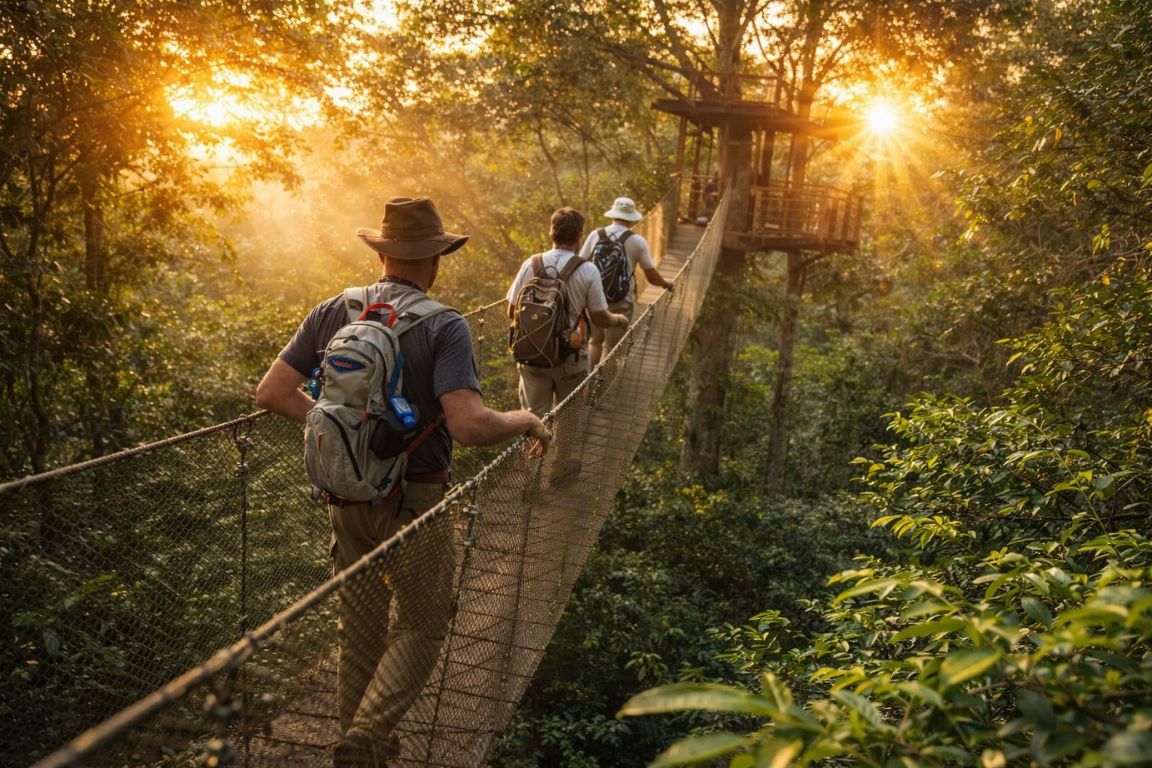 Let’s compare realistic daily experiences:
Morning Wake-Up (5:30am for Dawn Excursion)
Mid-Range Lodge:
- Wake to basic alarm, hot room (28-30°C despite fans running all night)
- Stumble to shared or basic ensuite bathroom
- Quick shower (hoping hot water working this early)
- Dress in yesterday’s slightly-damp clothes (humidity prevents full drying)
- Grab coffee from communal station
- Meet group (12 people) for 6am departure
Luxury Lodge:
- Wake to comfortable room (AC maintained 22-24°C all night)
- En-suite bathroom with quality amenities, guaranteed hot water, premium shower
- Dress in fresh clothes (room’s lower humidity allowed overnight drying)
- In-room coffee service or high-quality common area with barista-made espresso
- Meet small group (6 people) or private guide for departure
- Time flexibility (luxury lodges accommodate “can we leave 5:45am for better light?” requests)
Difference Impact: High – sleep quality affects entire day’s energy, comfortable wake-up creates positive start
Dawn Rainforest Hike (6-9:30am)
Mid-Range:
- Group of 10-12 people, one guide
- Competent naturalist points out wildlife, explains ecology
- Some crowding at good viewing spots (12 people trying to see same bird)
- Noise level from larger group occasionally scares wildlife
- Guide answers questions but limited time for individual attention
- See common species reliably, uncommon species if lucky
Luxury:
- Group of 4-6 people, expert guide (often with PhD or specialized research background)
- Guide spots cryptic species mid-range guides miss (camouflaged sloths, distant raptors)
- Everyone sees easily (small group, guide positions everyone)
- Whisper-quiet group doesn’t scare animals
- Guide provides extensive individual attention, answers complex questions
- Photographer in group? Guide accommodates tripod setup time. Birder? Extra time identifying calls.
- See common species reliably, better odds on uncommon species through expertise
Difference Impact: Very High – guide quality and group size dramatically affect wildlife encounters and learning
Return to Lodge, Breakfast (9:30-11am)
Mid-Range:
- Return sweaty and tired
- Room still hot from morning (no AC), less refreshing
- Shower (adequate hot water usually by 10am)
- Breakfast buffet: scrambled eggs, bread, fruits, coffee, juice (good quality, adequate variety, predictable)
- Casual dress code, communal atmosphere
Luxury:
- Return to cool AC room (immediately comfortable)
- Luxurious shower experience with premium products
- Breakfast: made-to-order eggs/omelets, fresh baked goods, tropical fruits artfully presented, specialty coffees, fresh juices, sometimes champagne for celebrations
- Can eat in main dining or request private deck breakfast
- White tablecloth service, attentive staff
Difference Impact: Moderate-High – physical comfort recovery matters more than you’d think after 4 hours in heat
Midday Siesta (1-3:30pm)
Mid-Range:
- Room with fans running (helps but still 28-30°C)
- Lie on bed attempting to rest, sweating, not deeply comfortable
- Many guests report difficulty sleeping due to heat
- Some read, some force rest, some accept being uncomfortable
- Emerge for afternoon activity still somewhat tired
Luxury:
- Room with AC set to comfortable 22-24°C
- Actually sleep or rest comfortably for 1-2 hours
- Quality bedding, premium mattress, proper pillows
- Wake refreshed and ready for afternoon activity
- This recovery period is transformative for energy management
Difference Impact: MASSIVE – heat exhaustion is cumulative over 4-5 days; luxury AC enables proper recovery while mid-range guests accumulate fatigue
Afternoon Activity (4-6:30pm)
Mid-Range:
- Group activity (canoe trip, fishing, community visit)
- Good experience, competent guide
- Fixed schedule (everyone does same thing)
- Quality activity but standard approach
Luxury:
- More customization: “Would couple prefer private canoe while families do fishing?”
- Expert guide adapts to interests (photographers get ideal light positioning, families get kid-friendly pacing)
- Premium equipment (better canoes, quality paddles, comfortable seats)
- Small group or private means flexibility (“Let’s extend this 30 minutes, the lighting is perfect”)
Difference Impact: Moderate – nice improvements but both deliver good experiences
Evening Dinner (7pm)
Mid-Range:
- Buffet or plated meal: rice, beans, fish or chicken, vegetables, fruit, coffee
- Good quality, adequate portions, fills you up
- After 3-4 days, becoming predictable and somewhat boring
- By Day 5, many guests report mild food fatigue (“wish for variety”)
Luxury:
- Multi-course plated meal: appetizer, soup or salad, choice of 2-3 entrées (fish, meat, vegetarian), dessert, coffee
- Brazilian specialties plus international options
- Wine pairings (included or available)
- Menu changes daily with no repetition across week
- Fresh herbs, complex preparations, presentation quality
- Special dietary needs handled seamlessly (vegan, gluten-free, allergies) without feeling like burden
Difference Impact: High – especially on 5+ day stays where mid-range food repetition becomes wearing
Night Excursion (8-9:30pm)
Mid-Range:
- Boat trip spotting caimans, night birds, frogs
- Good equipment (flashlights, boat)
- Competent guide identifying species
- 10-12 people per boat
- See abundant caimans (not guaranteed), night birds, insects
Luxury:
- Similar activity but smaller group (4-6 people)
- Sometimes private boat option
- Expert guide providing deeper knowledge (caiman behavior, breeding patterns, ecosystem role beyond “that’s a caiman”)
- Premium equipment (better flashlights, comfortable boat seating)
- More relaxed pacing (luxury guests less rushed, can linger at interesting sights)
Difference Impact: Moderate – both see same wildlife, luxury provides more comfort and deeper learning
Need a recommendation? Here are the best Amazon jungle tours that consistently get it right – from budget to luxury.
Overall Daily Difference
After 4-5 days, the cumulative impacts compound:
Mid-Range Guest by Day 4:
- Sleep-deprived from heat (accumulating over days)
- Mild food fatigue from repetitive meals
- Good wildlife encounters but wishing for more personal attention
- Physically tired, counting down to air-conditioned Manaus hotel
- Satisfied with experience but somewhat ready to leave
Luxury Guest by Day 4:
- Well-rested (AC sleep quality)
- Enjoying diverse excellent meals
- Extensive wildlife encounters with expert guidance
- Physically comfortable throughout
- Could happily extend stay another 2-3 days
The luxury difference isn’t single dramatic moments – it’s cumulative comfort advantage preventing the fatigue and monotony that erodes mid-range experiences by end of stay.
Wondering how to piece it all together? Our Brazilian Amazon rainforest itinerary walks you through the logistics step by step.
Recommended tours by season
July–September lodge dates are the ones this guide says to reserve six to eight months ahead. These four trips from Manaus run from one day to five.
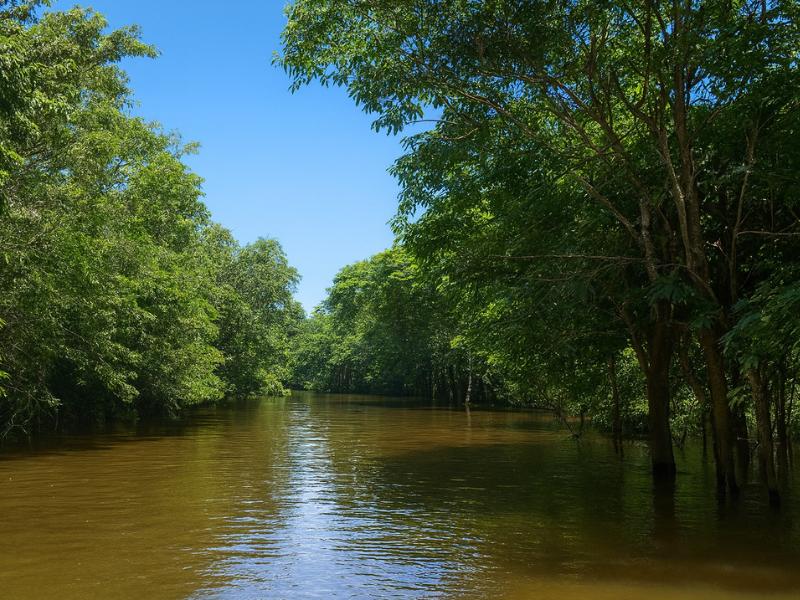
Amazon Jungle Tour: Full Day in the Rainforest
12-hour small-group tour from Manaus with a rainforest trek, a floating-house lunch, and an evening caiman spot. Hotel transfers included.
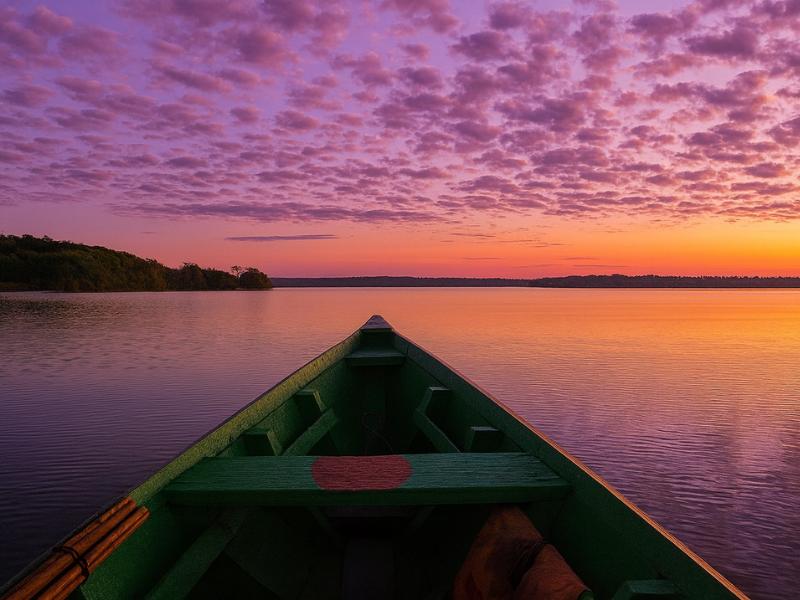
Amazon Jungle Tour: Overnight Rainforest Experience
Two days from Manaus with a rainforest hike, a night at a floating house, and a visit that includes the Meeting of the Waters.
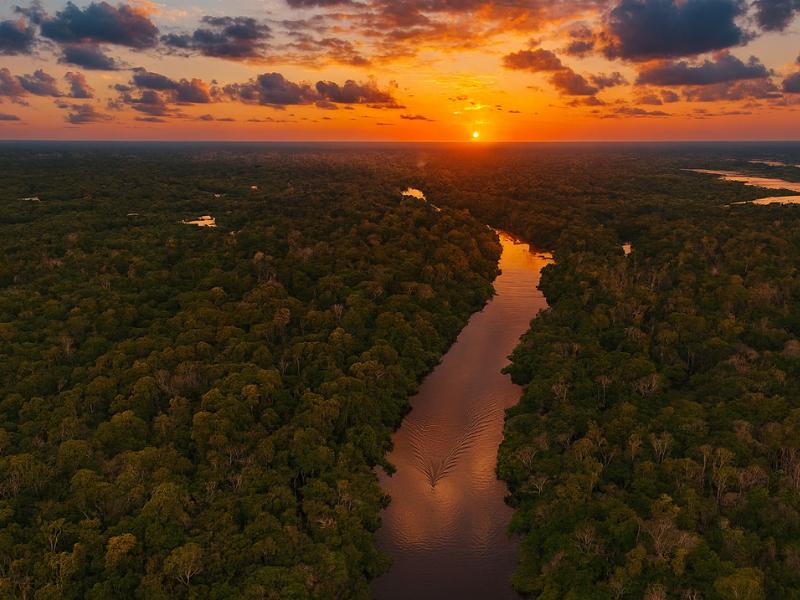
Amazon Jungle Tour: 3-Day Wildlife, Culture & Pink Dolphins Adventure
Three days focused on wildlife, a cultural visit, and pink dolphins.
Tapiri Floating Lodge: Multi-Day Amazon Experience from Manaus
Five-day lodge-based itinerary departing from Manaus.
When Is Luxury Actually Worth the Premium Cost?
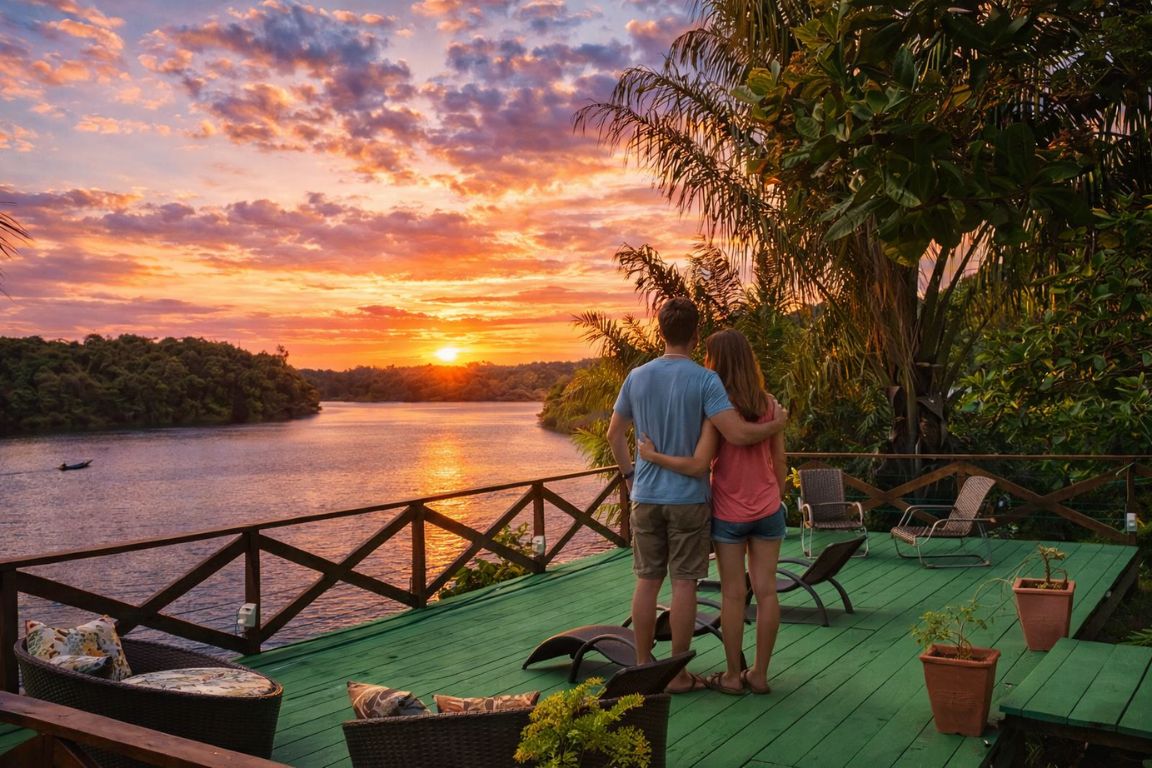
Luxury lodges make sense for specific traveler profiles and situations:
YES, Book Luxury If:
1. Heat Sensitivity or Age 60+ Years Air conditioning isn’t frivolous luxury if you’re heat-sensitive, elderly, or have health conditions exacerbated by heat. The sleep quality and midday recovery difference is profound. Many travelers 60+ report luxury AC transformed tolerable trip into comfortable one, while mid-range was borderline miserable by Day 3-4.
2. Special Occasions (Honeymoons, Anniversaries, Milestone Birthdays) Once-in-lifetime Amazon trip for 50th birthday or honeymoon justifies luxury investment. You’re creating memories – the comfort, romantic atmosphere, premium service, and small-group intimacy enhance the special nature. The $2,000-3,000 premium matters less on significant occasions.
3. Budget Accommodates Comfortably ($5,000+ Per Person Total Trip Budget) If your overall travel budget easily accommodates luxury pricing (the $1,000-2,000 premium doesn’t strain finances), the comfort improvement justifies cost. Budget travelers sacrificing other destinations to afford luxury should reconsider – mid-range delivers excellent wildlife at better value.
4. Physical Comfort Dramatically Affects Trip Enjoyment Some travelers adapt easily to basic conditions (young backpackers, experienced campers, adventure-oriented personalities). Others find discomfort so distracting it ruins experience. If you’re the latter, luxury prevents misery. The personality self-assessment matters: “Can I tolerate being hot, sweaty, and eating simple food for 5 days, or does that make me miserable?” Answer honestly.
5. Serious Wildlife Photographers or Naturalists Expert guides and small group sizes (sometimes private guides available) at luxury lodges provide dramatically better wildlife access and learning. Photographers get composition assistance, ideal positioning, extra time for shots, and guides who understand technical needs. Naturalists engage with research-level guide knowledge. For these specialists, the enhanced experience justifies premium.
6. Extended Stays (6+ Nights) The comfort advantage compounds over longer stays. Three nights, you can tolerate basic conditions. Six to seven nights, AC and gourmet food prevent the exhaustion and food fatigue that degrades experience. Luxury pricing for 6-night stay is $2,400-4,800 (versus $1,200-2,100 mid-range), but that $1,200-2,700 premium prevents burnout over extended period.
NO, Mid-Range is Better Value If:
1. Budget-Conscious ($2,000-3,000 Total Per Person Budget) The $1,000-2,000 luxury premium means choosing between luxury Amazon or adding second destination (Pantanal, Salvador, more Rio days). For budget-conscious travelers, mid-range Amazon plus additional Brazil destination delivers better overall trip than luxury Amazon alone.
2. Younger Travelers (Under 40) or Adventure-Oriented Personalities If you backpack regularly, camp comfortably, or prioritize experience over comfort, mid-range lodges provide excellent wildlife at 40-60% cost savings. The rustic character is part of adventure appeal, not detraction. Save luxury for when you’re older and less adaptable.
3. Prioritizing Wildlife Over Comfort Absolutely If wildlife is 90% of your motivation and comfort barely matters, choose mid-range lodge at optimal location (120-150km from Manaus) over luxury lodge at moderate location (80-100km). Location affects wildlife more than luxury amenities – though note that many luxury lodges also occupy prime remote locations, making this comparison less common.
4. Short Stays (3-4 Nights) Luxury benefits compound over time. For brief 3-night stays, you’re gone before food repetition becomes issue, before cumulative sleep deprivation matters significantly, before mid-range limitations frustrate. The comfort premium doesn’t justify itself in short duration. Save luxury for 5+ night stays.
5. Group Travelers or Families Where Social Atmosphere Matters Mid-range lodges with 8-12 guests create social atmosphere some travelers enjoy – comparing wildlife sightings, evening conversations, making friends. Luxury lodges with 4-6 guests total (sometimes just 2-4 guests if low season) feel intimate but potentially isolated. Families with gregarious children or solo travelers seeking social interaction might prefer mid-range group dynamics.
6. Repeat Amazon Visitors First Amazon trip: Splurge on luxury, maximize comfort while learning ecosystem. Second visit: Mid-range suffices – you know what to expect, tolerate conditions better, can allocate savings toward visiting different region (Pantajas versus Rio Negro). Luxury is special occasion splurge, not every-trip necessity.
If you’re feeling overwhelmed by all the options, check out our breakdown on how to plan a trip to the Brazilian Amazon tours step by step.
Table: Luxury Amazon Lodge Decision Matrix
| Your Profile | Luxury Recommended? | Reasoning | Alternative Consideration |
|---|---|---|---|
| Honeymoon/Anniversary | STRONGLY YES | Romance, special occasion, once-in-lifetime, comfort enhances experience | None – splurge justified |
| Age 60+ Years | YES | AC and comfort critical for heat tolerance, sleep quality essential | None – health consideration |
| Serious Photographer | YES | Expert guides, small groups, flexible timing worth premium | Mid-range if budget very tight but compromises results |
| Budget Under $3,000 Total | NO | Premium strains finances, mid-range delivers good value | Allocate savings to additional destinations |
| First-Time Amazon | MAYBE | Luxury ensures comfort for unknowns, but mid-range adequate | Mid-range if budget-conscious, luxury if comfortable finances |
| Return Visitor | NO | Experience from first trip allows tolerating mid-range | Luxury if first visit was budget and upgrading |
| Young Backpacker (20s-30s) | NO | Adapt easily to conditions, rustic is adventure appeal | Budget or mid-range maximizes value |
| Family with Kids | MAYBE | Kids adapt or complain – depends on personalities | Mid-range often better (kids don’t appreciate luxury nuances) |
| Extended Stay (6+ nights) | YES | Comfort compounds over time preventing fatigue | Mid-range if highly heat-tolerant |
| Heat-Sensitive | YES | AC transforms experience from miserable to enjoyable | None – comfort is medical necessity |
| Social Atmosphere Priority | NO | Mid-range larger groups create friendships | Luxury if preferring intimate small groups |
| Wildlife Only Priority | NO | Mid-range at remote location equals luxury wildlife odds | Luxury if guides expertise truly matters for learning |
How Do Specific Luxury Lodge Features Compare?
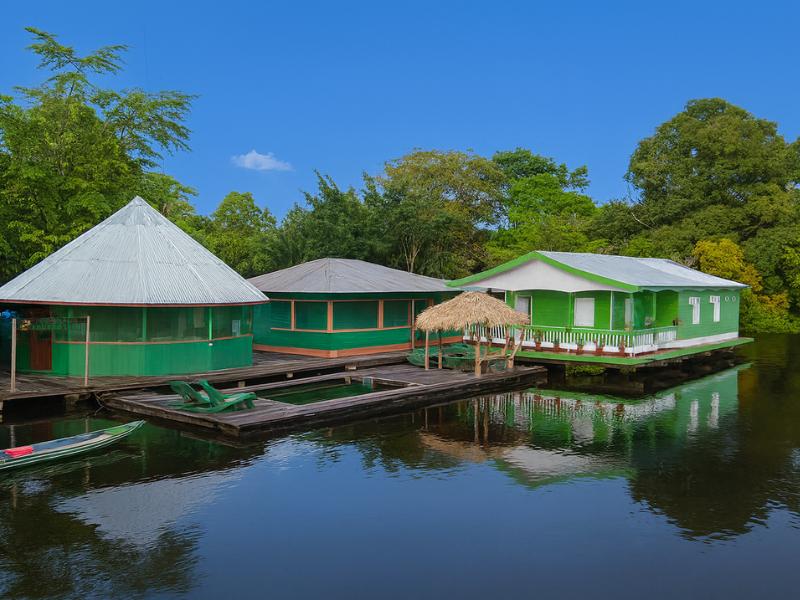
Breaking down what premium pricing delivers feature-by-feature:
Suite Size and Privacy
Standard Mid-Range: 18-22 sqm room, double bed or twins, small desk, basic storage, window with screens, ceiling fan, functional bathroom Luxury Upgrade: 40-60 sqm suite, king bed with premium linens, sitting area with sofa/chairs, writing desk, ample closet, private deck with hammock, multiple fans plus AC, spacious bathroom with dual sinks and premium fixtures
Value Assessment: Nice-to-have but not essential. The extra 30 sqm provides comfort but doesn’t affect wildlife viewing or learning. Worth premium if you spend significant time in room (midday siestas, early evenings, rainy days). Less important if you’re active all day and only sleep in room.
We’ve put together a detailed packing list for the Brazilian Amazon tours based on what actually works in the jungle – not just what the brochures say.
No verified affiliate itinerary in this shortlist delivers this specific request. Keep this part of your plan independent; the options below should not be treated as a substitute.
Food Quality and Variety
Standard Mid-Range: Chef-prepared Brazilian cuisine, adequate variety, buffet service
- Breakfast: Eggs, fruits, breads, coffee/juice
- Lunch: Rice, beans, grilled fish or chicken, vegetables, salad, fruit
- Dinner: Similar to lunch with slight variations
- After 4-5 days: Repetition becomes noticeable, some guests report food fatigue
Luxury Upgrade: Gourmet chef with culinary training, extensive variety, plated service
- Breakfast: Made-to-order omelets, artisan breads, tropical fruits artfully presented, specialty coffees, fresh juices, sometimes smoked fish or charcuterie
- Lunch: Appetizer, choice of entrées (3 options), dessert, wine available
- Dinner: Multi-course, international influences, premium ingredients, wine pairings
- Menu changes completely each day, zero repetition across week
Value Assessment: High impact on 5+ day stays. Food quality significantly affects morale by Day 4-5. The variety prevents the dining fatigue that erodes mid-range experiences. Worth premium for extended stays or gourmands. Less important for 3-4 day stays or travelers indifferent to cuisine.
No verified affiliate itinerary in this shortlist delivers this specific request. Keep this part of your plan independent; the options below should not be treated as a substitute.
Guide Expertise
Standard Mid-Range: Bilingual naturalist guides, university education typical, 5-10 years experience, competent wildlife identification, good teaching ability Luxury Upgrade: Expert naturalists with advanced degrees (masters or PhDs in biology, ecology, zoology), published research, specialized certifications, 10-20+ years experience, exceptional wildlife spotting and detailed knowledge
Specific Differences:
- Cryptic species: Luxury guides spot camouflaged sloths, distant raptors, hidden snakes mid-range guides miss (30-40% more diverse sightings)
- Knowledge depth: Luxury guides answer complex questions (forest succession patterns, specific animal behavior research, ecological relationships) mid-range guides defer or answer superficially
- Customization: Luxury guides adapt to guest expertise (photographers understand composition, birders know species, families need kid-friendly explanations)
Value Assessment: Very High for serious enthusiasts, photographers, naturalists. The expertise difference is profound if you care deeply about learning and wildlife. Moderate value for casual tourists satisfied with common species identification and basic ecology explanations.
Service Level and Staff Ratios
Standard Mid-Range: Good attentive service, 3-5 staff-to-guest ratio, needs met efficiently Luxury Upgrade: Exceptional anticipatory service, 1-2 staff-to-guest ratio, needs met before you ask
Examples:
- Mid-range: You ask for coffee at breakfast, staff brings it promptly
- Luxury: Staff notices your coffee cup empty, refills without asking
Value Assessment: Nice but superficial. High service ratios create pleasant atmosphere but don’t fundamentally change experience. Worth premium for travelers who deeply value attentive service (corporate executives, luxury-habituated travelers). Less important for independent travelers comfortable with self-sufficiency.
No verified affiliate itinerary in this shortlist delivers this specific request. Keep this part of your plan independent; the options below should not be treated as a substitute.
Activities and Flexibility
Standard Mid-Range: Fixed daily schedule, all guests do same activities, some modifications possible (skipping activities, varying difficulty levels) Luxury Upgrade: Highly customized programming, individual or couple schedules, private guide options, extensive flexibility
Examples:
- Mid-range: 6am dawn hike, 4pm canoe trip (everyone together)
- Luxury: 5:45am extended dawn hike for photographers, 10am beginner bird walk for families, 4pm private canoe for honeymoon couple wanting romance, 6pm standard group canoe for social guests
Value Assessment: High for specific needs (serious photographers needing timing flexibility, families requiring kid-appropriate pacing, honeymoon couples wanting privacy). Moderate for travelers happy with standard schedules and group activities.
Table: Luxury Lodge Feature Priority Matrix
| Feature | Impact on Experience | Who Benefits Most | Worth Premium Cost? | Can Mid-Range Approximate? |
|---|---|---|---|---|
| Air Conditioning | MASSIVE | Heat-sensitive, 60+, health conditions | STRONGLY YES | No – fans inadequate |
| Expert Guides | VERY HIGH | Wildlife enthusiasts, photographers, naturalists | YES | Partially – good guides exist mid-range |
| Small Groups (4-6) | HIGH | Wildlife viewing, intimate experience | YES | No – mid-range typically 8-12 |
| Gourmet Food | HIGH (5+ days) | Gourmands, extended stays | YES for long stays | No – mid-range variety limited |
| Suite Size/Space | MODERATE | Extended stays, couples, comfort priority | MAYBE | No – mid-range compact |
| Private Bathrooms | HIGH | Privacy, convenience, medical needs | YES | Partially – mid-range often has ensuite |
| Customization | MODERATE-HIGH | Specific interests, special needs | MAYBE | Limited – mid-range has some flexibility |
| Service Excellence | MODERATE | Luxury-habituated, high expectations | MAYBE | Mid-range service is good enough |
| Design/Aesthetics | LOW-MODERATE | Ambiance, special occasions | NO | Irrelevant – doesn’t affect core experience |
| Wildlife Outcomes | LOCATION-DEPENDENT | Everyone | Location > Luxury | YES – location matters more than amenities |
Priority Ranking for Choosing Luxury:
- AC (if heat-sensitive)
- Expert guides (if serious enthusiast)
- Small groups (wildlife viewing)
- Gourmet food (extended stays)
- Private bathrooms (convenience)
- Everything else (nice but not critical)
FAQs
Is luxury Amazon lodge worth the extra cost or should I save money with mid-range? Luxury justifies 80-120% premium ($2,000-3,000 vs $1,200-1,600 for 5 nights) if: you’re heat-sensitive requiring AC for comfortable sleep, over 60 years old needing comfort for trip enjoyment, celebrating special occasion (honeymoon, milestone birthday), budget comfortably accommodates $5,000+ per person total, or you’re serious wildlife photographer/naturalist valuing expert guides and small groups. Mid-range delivers better value if: budget-conscious ($2,000-3,000 total trip budget), under 40 and adventure-oriented tolerating basic conditions easily, prioritizing wildlife absolutely over comfort (choose remote mid-range over near luxury), or short 3-4 night stay where luxury benefits don’t compound enough to justify premium. The deciding factor: does physical comfort dramatically affect your enjoyment or can you tolerate being hot and eating simple food for 5 days?
What’s the main difference between luxury and mid-range Amazon lodges? Air conditioning is THE game-changing luxury feature – sleeping and resting in 22-24°C AC (luxury) versus 28-30°C with fans (mid-range) transforms exhaustion management over 4-5 days. Second biggest: guide expertise and group size – luxury lodges provide expert naturalists with advanced degrees spotting cryptic wildlife casual guides miss, plus 4-6 guest groups versus 10-12 mid-range enabling intimate viewing and personal attention. Third: food quality – gourmet chef-prepared diverse cuisine (luxury) prevents the dining fatigue that repetitive mid-range meals create by Day 4-5 of extended stays. However, wildlife encounter quality depends primarily on location remoteness (100km+ from Manaus) and visitor luck, not accommodation luxury – both deliver excellent animal sightings when properly located.
Do luxury Amazon lodges see more wildlife than mid-range lodges? Not dramatically more – wildlife depends on location remoteness (100km+ from cities) and luck more than accommodation quality. Luxury lodges typically occupy excellent remote locations AND provide expert guides with PhD-level knowledge spotting camouflaged species (sloths, distant raptors, cryptic birds) casual observers miss, resulting in 25-40% more diverse species identification. However, well-located mid-range lodges (120-150km from Manaus) with competent guides see 80-90% of what luxury lodges see. The wildlife advantage isn’t proportional to cost increase – luxury is 2-3x more expensive but sees only 1.3x more diverse species. Choose luxury for guide expertise and learning depth, not for dramatically different animal encounter quantity when both occupy similar remote locations.
Can families with children stay comfortably at luxury Amazon lodges? Yes – luxury lodges handle families better than mid-range through: AC sleep (critical for kids who tolerate heat poorly), spacious family suites or connecting rooms (kids need space), flexible activity scheduling (kid-appropriate shorter hikes, swimming breaks, rest periods), diverse food menus accommodating picky eaters, and small group sizes (4-6 total guests means families don’t disrupt others with noise/energy). Recommended minimum age 8-10 years for luxury Amazon (younger children struggle regardless of comfort level). Cost consideration: Family of 4 pays $3,200-4,800 for 4 nights luxury ($800-1,200/night × 4 guests) versus $1,600-2,400 mid-range, but the $1,600-2,400 premium buys comfort preventing miserable overheated children ruining family trip.
How far in advance should I book luxury Amazon lodges? Six to eight months minimum for peak dry season (July-September) when luxury lodges fill completely by February-March for summer dates – limited rooms (often 4-8 guest capacity total) create scarcity. Shoulder season (June, October) requires 4-5 months advance booking. Wet season (January-March) allows 2-3 months though best lodges maintain demand year-round. Last-minute bookings (4-6 weeks before) occasionally find availability during low season but risk settling for suboptimal properties or dates. Special occasions (honeymoons, anniversaries) warrant earliest possible booking securing preferred dates, while flexible travelers can wait slightly longer gambling on availability and possible last-minute deals.
Do luxury lodges require tips and how much? Yes – tipping expected despite premium pricing ($15-20 per person per day recommended at luxury level versus $10-15 mid-range). For 5-day/4-night stay, budget $60-100 per person tips divided between guides (60-70%), kitchen staff (15-20%), and general staff (15-20%). Some luxury lodges provide sealed envelopes; others have communal tip box. The higher recommended rate reflects: exceptional service deserves recognition, guides have advanced expertise, and staff-to-guest ratios are higher (more people serving fewer guests). Plan tips into budget – $80 per person tips × 2 people = $160 total on top of $2,400-3,200 lodge package for couple.
Are luxury Amazon lodges adults-only or do they accept all ages? Most luxury lodges accept all ages without restrictions though atmosphere skews adult-oriented due to: early morning schedules (5:30am wake-ups challenging for young children), intensive activities (3-4 hour hikes not kid-friendly), intimate small groups where children’s energy might disrupt other guests, and honeymooner/couples focus. Some properties explicitly cater to families with kid-appropriate programming. Ask specifically when booking: minimum age restrictions (some require 8+ or 10+), family suite availability, activity modifications for children, children’s menu options, and recent family guest experiences. Luxury lodges work well for families with mature children (10+) who tolerate early schedules and hiking intensity, less suitable for families with children under 8.
Can luxury lodges accommodate dietary restrictions and food allergies? Yes – exceptionally well compared to mid-range. Luxury lodge chefs handle: vegetarian (easily, extensive options), vegan (well, though more limited in jungle context), gluten-free (yes, with advance notice), food allergies (tree nuts, shellfish, dairy – manageable with communication), and religious restrictions (kosher/halal challenging but vegetarian alternatives work). Communicate restrictions when booking (3-6 months advance) and reconfirm 2 weeks before arrival. Luxury kitchens have ingredient variety and chef expertise mid-range operations lack. However, even luxury lodges are remote – severe restrictive diets (requiring specialty ingredients unavailable in Amazon) should bring supplemental protein bars, though meals will be adequate if communicated properly.
Glossary
All-Inclusive Luxury: Pricing structure at premium lodges covering suite accommodation, gourmet meals with wine, all standard activities, expert guides, transfers, and often premium alcohol – typically $400-800/night versus mid-range $200-350/night, though exact inclusions vary by property.
Climate Control: Air conditioning systems (partial: running during sleep hours 10pm-6am and electricity windows, or full: 24-hour availability) transforming Amazon lodge experience by enabling comfortable sleep in 22-24°C versus 28-30°C fan-only rooms – THE defining luxury feature.
Expert Naturalist Guide: Premium guide with advanced degree (masters or PhD in biology, ecology, zoology), published research, specialized certifications, 10-20+ years experience, and exceptional wildlife spotting abilities exceeding competent bilingual guides at mid-range lodges.
Small Group Size: Luxury standard of 4-6 guests maximum per departure (often fewer in low season) versus mid-range 8-12 guests, dramatically improving wildlife viewing (quiet groups don’t scare animals), personalized attention, and intimate atmosphere.
Gourmet Cuisine: Chef-prepared multi-course meals with extensive variety, premium ingredients, international influences alongside Brazilian specialties, wine pairings, and complete menu rotation across week preventing dining fatigue occurring at mid-range by Day 4-5.
Private Suite: Spacious accommodation (35-60+ square meters versus mid-range 15-25 sqm) including separate sitting area, private deck with hammock, quality furniture, ample storage, and ensuite bathroom with premium amenities – comfort between activities.
Staff-to-Guest Ratio: Number of lodge staff per guest indicating service level – luxury operates 1:1 to 2:1 ratios (one or two staff per guest) enabling anticipatory service, while mid-range runs 3:1 to 5:1 (adequate but less attentive).
Customized Programming: Luxury flexibility allowing personalized schedules, private guides, activity modifications for individual interests (photographers needing timing flexibility, families requiring kid-friendly pacing, couples wanting privacy) versus fixed mid-range schedules.
Location Premium: Concept that lodge remoteness (distance from Manaus affecting forest integrity and wildlife quality) matters more than accommodation luxury for animal encounters – explaining why remote mid-range sometimes delivers better wildlife than near luxury despite comfort trade-offs.
Luxury Amazon Paradox: Understanding that Brazilian Amazon “luxury” doesn’t equal urban five-star hotels due to fundamental rainforest infrastructure limitations (limited electricity, no roads, treated river water, remote medical access) – premium lodges deliver best possible comfort within these constraints, not city-equivalent amenities.
Written by a Brazilian Amazon specialist with extensive experience comparing luxury and mid-range lodge outcomes understanding that premium pricing delivers genuine comfort improvements (AC, gourmet food, expert guides, small groups) dramatically affecting trip enjoyment for heat-sensitive, older, or comfort-priority travelers, while simultaneously recognizing wildlife encounter quality depends more on location remoteness and luck than accommodation luxury – enabling honest assessment that luxury justifies premium for specific traveler profiles (special occasions, heat sensitivity, serious naturalists) but mid-range at excellent remote locations delivers 80% of experience at 40-60% of cost for budget-conscious visitors prioritizing animals over amenities and tolerating basic conditions during 4-5 day rainforest immersions. Date: December 29, 2025.