What to Do in Manaus: A City Guide for Before or After Your Jungle Tour
Manaus is where an Amazon trip starts and ends, and most itineraries reduce it to one night before the boat and one night after. That is a small waste. This guide covers the city itself, what fits into an afternoon or two full days, and how to slot a city day around a tour pickup without ruining either.
Choose city sights, river time or a forest museum visit. Explore Manaus City And Amazon River Tour ↗
Almost nobody flies to Manaus for Manaus. The city is a river port dropped into the middle of the rainforest, the place your jungle transfer collects you from at seven in the morning, and the place you come back to with mud on your boots. Plenty of visitors see nothing of it except a hotel lobby and the road to the terminal. That is a shame, because the city has a rubber-boom opera house, a river beach, a historic market hall, and a setting that explains a great deal about what you are going to see upstream.
What follows is about the city, not the jungle. It assumes you have a tour booked or are about to book one, and that you have somewhere between a spare afternoon and two full days around it. The rest of this site handles the rainforest. This page handles the hours in between.
The short version: one full day covers the three landmark stops. Teatro Amazonas, the rubber-boom opera house that is the city's symbol. The Mercado Municipal Adolpho Lisboa, the historic central market. And Ponta Negra, the riverside beach and promenade, which is best late in the day. A second day only earns its place if you use it on the Meeting of the Waters, and that is a boat trip out of the city rather than a city sight.
Trip choice: Pair the opera house and market complex with the Meeting of the Waters and Janauary Lake in a single day. Explore This 9 hours Experience ↗
Why does every Amazon trip pass through Manaus?
Manaus is the capital of Amazonas state and the practical gateway to the Brazilian Amazon. It sits on the Rio Negro, just above the point where that river meets the Rio Solimões, and it holds the region's international airport. Nearly every lodge, boat and day tour in this stretch of rainforest collects you here.
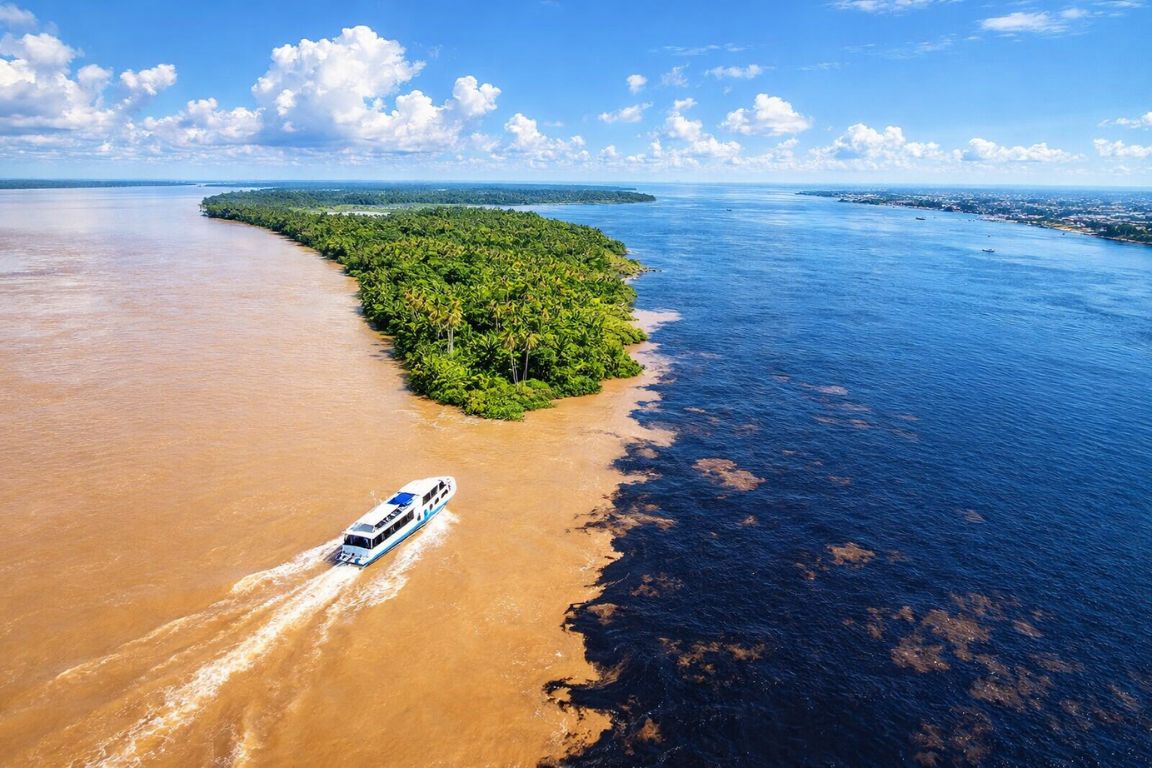
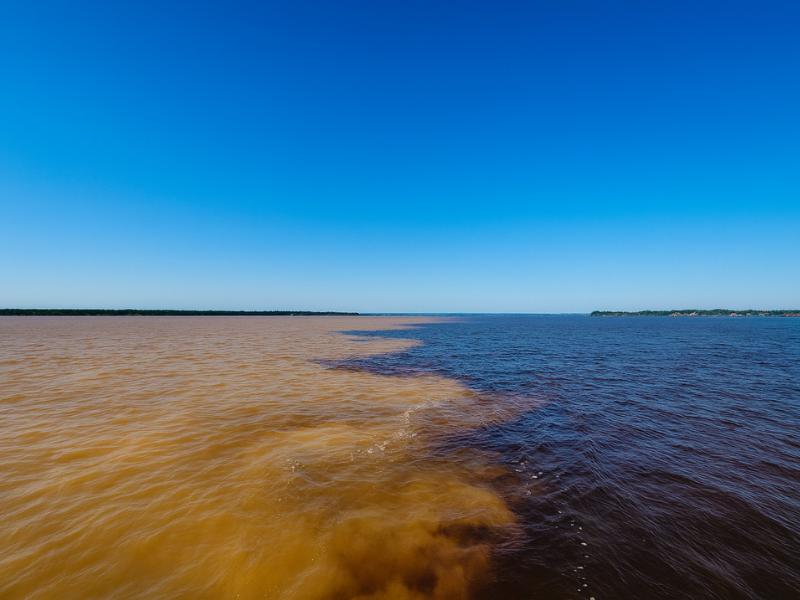
That position is the whole story. The Rio Negro runs dark, cool and slow past the city, carrying almost no sediment; the Solimões arrives pale and fast, thick with material eroded off the Andes. They meet just downstream and run side by side for roughly 6 km before they blend, which is the phenomenon half the day trips out of Manaus are built around. Downstream of that confluence the river is the Amazon proper.
The city itself grew rich during the late-nineteenth-century rubber boom and spent a good share of that money on grand public buildings, the opera house above all. What is left today is a working port with a very ornate theatre in the middle of it, which is a strange and quite specific thing to walk around.
For a visitor the useful consequence is logistical rather than romantic. Jungle lodges sit anywhere from around 30 km to 180 km out and are reached by boat transfer, so Manaus is where you sleep the night before an early pickup and the night you get back. Our guide to planning a trip to the Amazon covers the gateway decision in full. This page starts from the assumption that it is already made.
How much time in Manaus is actually worth it?
One full day is the sweet spot. It comfortably covers the market, the opera house and the historic core in the morning, then Ponta Negra in the late afternoon. Anything under half a day means picking a single landmark. Anything beyond two days is better spent upriver.
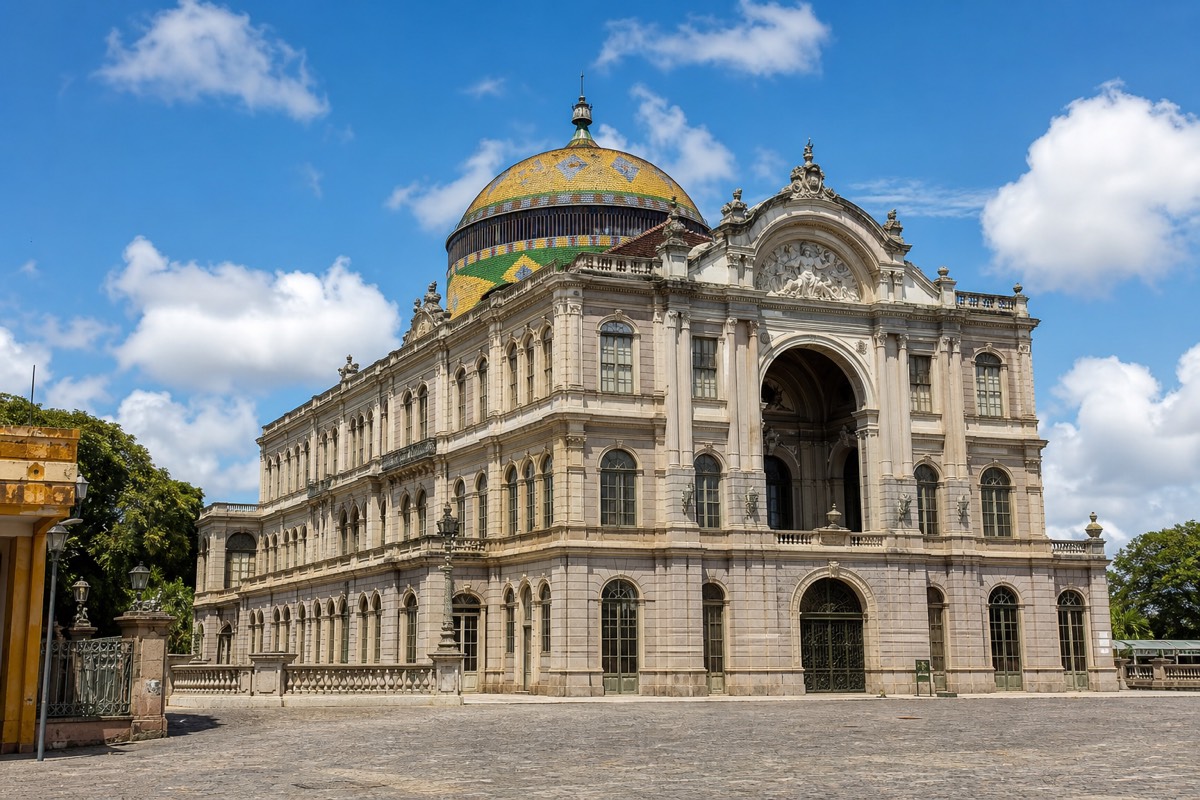
The city is compact in terms of what a visitor actually wants from it. There are three genuine landmark stops, not thirty, and the reward curve flattens fast after the first day. The reason to give it two is not a longer list of sights but the Meeting of the Waters, which needs a boat and most of a morning.
| Time in Manaus | What fits | Verdict |
|---|---|---|
| A few hours | One landmark, realistically the opera house or the market | Enough to say you saw the city |
| One full day | Market, opera house, historic centre, Ponta Negra at dusk | The sweet spot |
| Two days | All of the above plus a Meeting of the Waters boat trip | Worth it if that trip is not already inside your tour |
| Three days or more | Diminishing returns | Put the extra nights in the jungle instead |
One caveat that changes the maths. Several of the longer jungle trips already include the Meeting of the Waters on the way out, because the speedboat passes it. If yours does, a second city day loses most of its reason to exist. Check your itinerary before you book an extra night.
What is Teatro Amazonas, and is it worth an hour?
Yes, and it is the one stop that would still be remarkable if you moved it anywhere else in the world. Teatro Amazonas is an opera house built during the late-nineteenth-century rubber boom, financed by a trade that no longer exists, standing in a city surrounded by rainforest on all sides.
The interest is not really architectural. It is the sheer improbability of the thing. Rubber money bought a European-style theatre and dropped it a thousand miles up a river, and it is still the image that represents Manaus on every postcard and every guidebook cover. Standing in the square in front of it does more to explain the city's nineteenth century than any amount of reading.
We do not publish opening hours or ticket prices for it here, deliberately. Those change, and a stale figure on a travel page is worse than no figure at all. Check the current hours and whether guided visits or performances are running before you build a morning around it. If you are on a tight schedule, the exterior and the square are free and take fifteen minutes.
What do you actually do at Ponta Negra?
Ponta Negra is the city's riverside beach and promenade, and it is an evening place rather than a sightseeing stop. You walk, you sit, you watch the Rio Negro, and you see Manaus doing something other than work. It is the closest the city comes to a resort atmosphere.
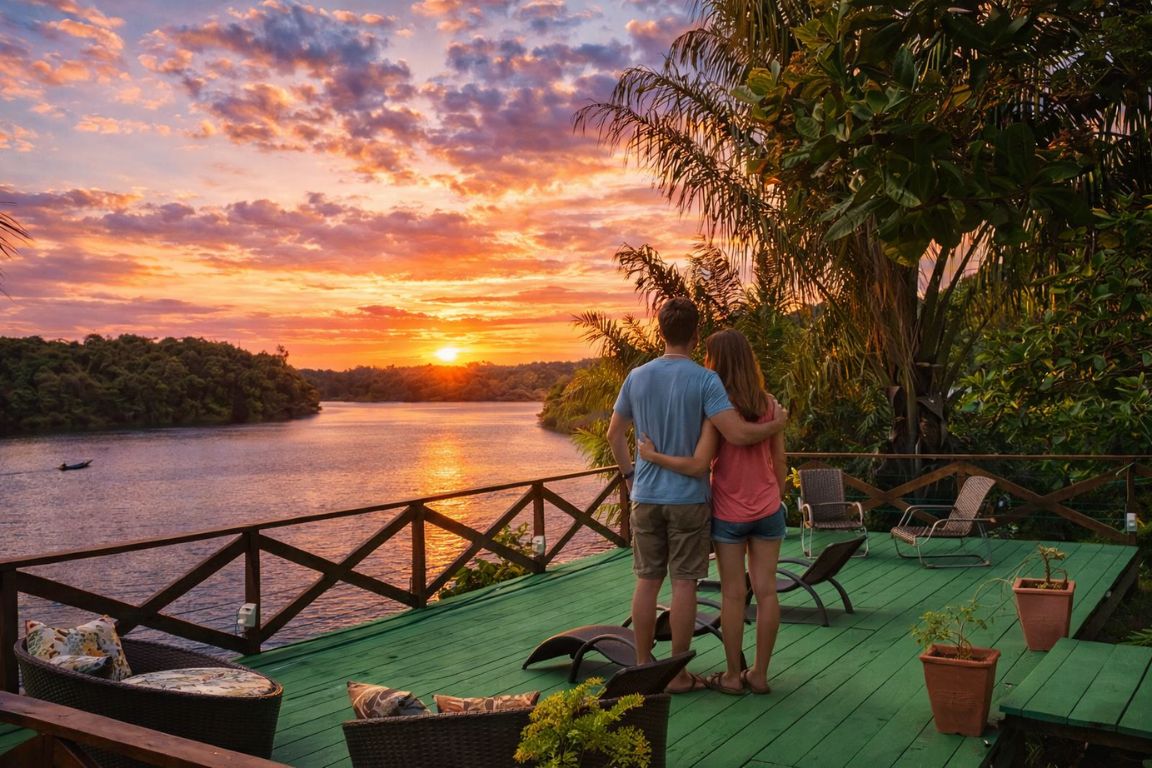
How much sand there is depends on the river. The Amazon basin runs on an annual rise and fall, the same cycle that decides whether your jungle tour walks dry trails or paddles through flooded forest, and the beach at Ponta Negra expands and shrinks with it. In the low-water months there is a proper stretch of sand. When the river is high, there is considerably less of it, and the promenade does the work instead.
Timing matters more here than at any other stop in the city. Midday on the riverfront is punishing, with no shade and full equatorial sun. Late afternoon into sunset is when the place fills up and makes sense. If you only have one evening in Manaus and you are not too tired from a flight, this is where to spend it.
The promenade is an independent stop. The verified city itineraries here do not establish a Ponta Negra visit, so no tour is presented as including it.
Is the Mercado Municipal Adolpho Lisboa worth a stop?
If you have any interest in what people here actually eat, yes. The Mercado Municipal Adolpho Lisboa is the historic central market, an iron-framed hall of river fish, forest fruit and dry goods, and it is the fastest education in Amazonian food available anywhere in the city.
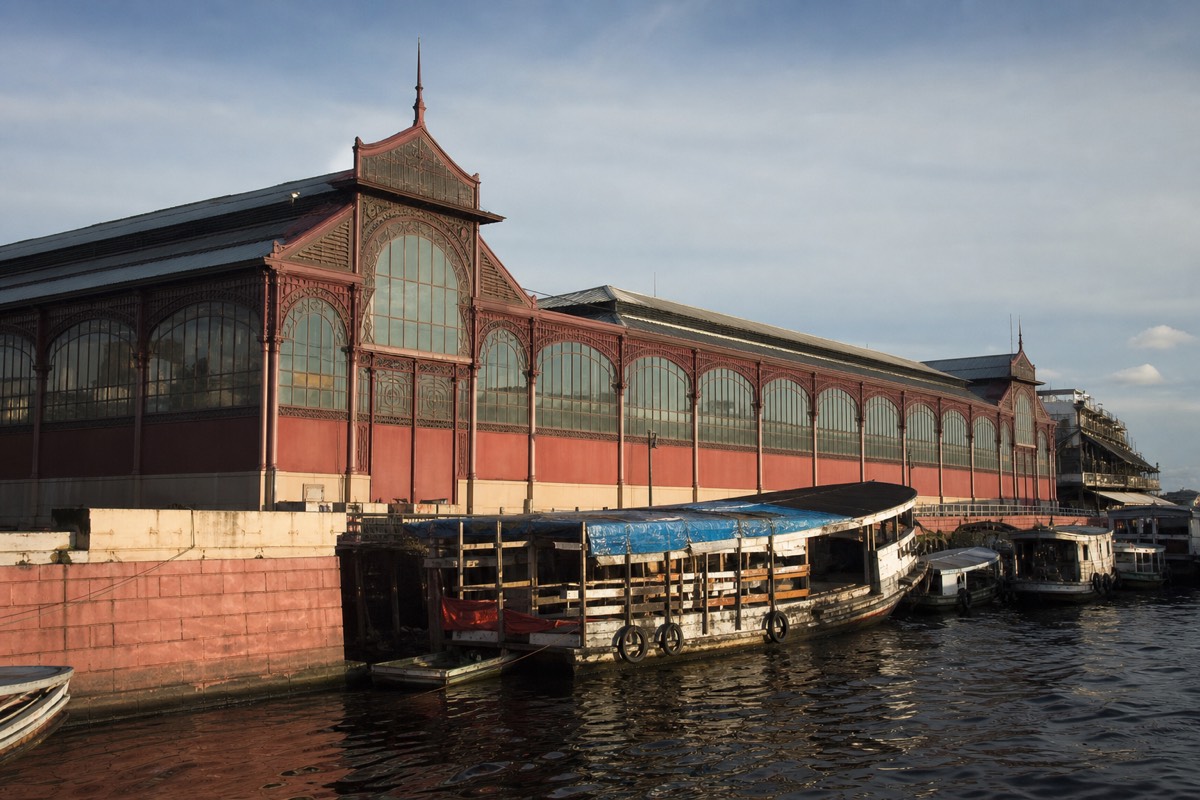
The fish counters are the reason to go. Tambaqui and peacock bass, the two species that turn up on almost every tour lunch plate on this site, are sold here whole, alongside a dozen others that have no English name at all. The fruit is stranger still. It is a working market rather than a tourist attraction, which is exactly what makes it worth thirty minutes.
Go early. Markets everywhere are at their best in the first hours of trading and this one is no exception, with the added incentive that the hall gets hot as the day goes on. As with the opera house, check current opening hours before you commit a morning to it, since we are not going to quote a figure here that may have changed by the time you read this.
What happens when you land at Eduardo Gomes International Airport?
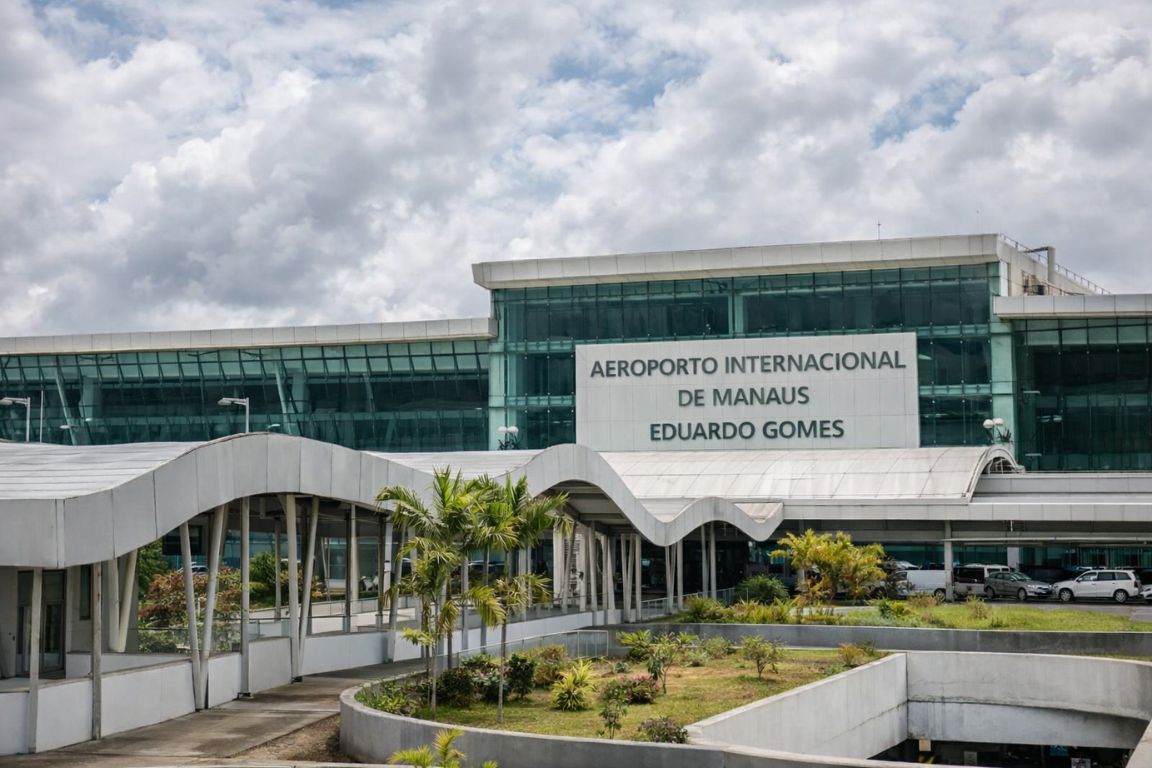
Eduardo Gomes International Airport is Manaus's airport and the arrival point for essentially every Amazon trip in this region. It handles the domestic connections from São Paulo and Rio along with a small number of international routes, and it is where your first decision about the city gets made for you by your arrival time.
There is a detail here that a lot of travellers miss and that saves a night's hotel. Several of the multi-day trips we list, including the lodge stays and the survival trips, offer pickup from the airport as well as from a Manaus hotel. If your flight lands early enough on the morning your tour starts, you can go straight from arrivals to the boat without checking into anywhere. Confirm it at booking rather than assuming it, because the shorter day tours generally collect from hotels only.
If you are not doing that, treat your arrival time as the thing that decides your first day.
| Your flight lands | What is realistic that day |
|---|---|
| Before midday | Drop bags, historic centre in the afternoon, Ponta Negra at dusk |
| Mid afternoon | Ponta Negra or dinner near the hotel. Do not try to add the centre. |
| After dark | Nothing. Sleep, and treat tomorrow as day one. |
| The morning your tour starts | Ask about airport pickup at booking; several lodge trips do it |
Should your city day come before or after the jungle?
After, if you get to choose. You will be more tired, but you will have seen the rivers, met the fish and heard the guides talk about rubber and ribeirinho life, and every one of those makes the opera house and the market land harder. Before is the safer option only when your flights are tight.
The argument for going first is risk management. A delayed flight eats a city day rather than a tour departure, and tours are the thing you have paid for. The argument for going second is that Manaus is not a very legible city on day one. Its whole nineteenth century was built on a forest trade, and the market makes far more sense once you have eaten tambaqui on a floating house.
| City day before the jungle | City day after the jungle |
|---|---|
| You arrive fresh and the camera battery is full | You arrive back tired, sunburnt and slower |
| A flight delay costs you the city, not the tour | A delay leaving costs you nothing you paid for |
| The opera house has no context yet | The rubber money makes sense once you have seen the rivers |
| Risk: a late arrival wipes it out entirely | Risk: you may only want a shower and a bed |
A compromise most people land on: an easy evening at Ponta Negra on the way in, and the centre on the way out. It splits the difference and neither half depends on you being energetic.
How do tour departure times shape your city time?
Pickup times out of Manaus are early and return times are late, so a tour day is a whole day. What varies is which half of the surrounding days you get back. A six-hour morning trip leaves you an afternoon. A twelve-hour jungle day leaves you nothing at all.
These are the real windows on the tours from Manaus we list, taken from the operators' own itineraries. They are the single most useful planning table on this page, because most people book the tour first and then wonder what is left.
| Tour | Typical pickup | Back in the city | City time it leaves you |
|---|---|---|---|
| Meeting of the Waters and pink dolphins with lunch (6 hours) | Around 8:30 AM | Around 2:30 to 3:00 PM | A full afternoon and evening |
| Jungle trek to the Anavilhanas Archipelago (8 hours) | 8:00 AM | Around 4:30 PM | Evening only |
| Evening tour with piranha fishing and an alligator watch (5 hours) | Set at booking, late in the day | After dark | The entire day before it |
| Full day in the rainforest (12 hours) | Around 8:00 AM | Around 8:30 PM | None, and you will not want any |
| Multi-day lodge and camping trips | 7:30 to 8:00 AM, hotel or airport | Around 4:30 PM on the final day | The return afternoon and evening |
The pattern that falls out of this is worth planning around. If you want city time and jungle time in the same short trip, the six-hour river tour and the five-hour evening tour are the two that leave real hours on the table. A twelve-hour jungle day is the opposite: it is the day, and the city has to happen either side of it.
Is the Meeting of the Waters a city trip or a jungle trip?
It is a boat trip, run out of Manaus, and it sits between the two. You are on the water rather than in the forest, you are back in the city by mid afternoon, and it is the single best half day available to anyone who cannot spare a full jungle day.
What you are looking at is genuinely unusual. The Rio Negro is dark, acidic, cooler and slower, and its colour comes from dissolved organic matter rather than silt. The Solimões is pale and sandy-yellow, warmer, faster and heavy with sediment washed down from the Andes. Differences in temperature, speed, density and chemistry keep them from mixing for roughly 6 km, and turbulence, wind and the river's own bends eventually do the job.
The version most visitors take is the Meeting of the Waters tour with pink dolphins and lunch, a six-hour trip with hotel pickup from selected Manaus hotels, an indigenous village stop, a dolphin encounter and a simple Amazonian lunch, in a group capped at twenty. It is the closest thing to a half-day sampler of everything the region does. If your longer tour already passes the confluence on the way out, skip it and use the time on the city instead.
What does a realistic one-day Manaus plan look like?
Market first thing, opera house and the historic core mid-morning, indoors through the worst of the midday heat, and Ponta Negra from late afternoon into sunset. That order is dictated by temperature more than by geography, and reversing it makes for a much worse day.
The heat is the constraint people underestimate. Manaus sits practically on the equator and stays hot and humid all year, so a plan that has you walking around at one in the afternoon is a plan that ends early with everyone irritable. Front-load the walking.
| Time | Where | Notes |
|---|---|---|
| Early morning | Mercado Municipal Adolpho Lisboa | Markets are best at the start of trading, and the hall is cooler |
| Mid morning | Teatro Amazonas and the historic centre around it | Check current hours and whether visits are running |
| Midday | Indoors and out of the sun | The hottest hours. Not the time for a walking tour. |
| Late afternoon | Ponta Negra | The promenade and the beach, once the light softens |
| Evening | Ponta Negra or back in the centre | Dinner, then an early night if a tour collects you at eight |
Two practical notes. Check a map before you assume you can walk between any two of these, because the centre and the riverfront district are not the same neighbourhood. And keep the packing list in mind even for a city day: sun protection and insect repellent are not a jungle-only concern here.
What does Manaus not do well?
Wildlife, mainly. This is a city, and the rainforest starts where the city stops. If you came to see pink dolphins and caimans, none of that happens between the market and the opera house, and no amount of city time substitutes for a day on the water.
It is also worth being straight about the shape of the place. Manaus is a working river port with a heavy industrial free-trade zone attached, not a preserved colonial town. The historic core is a few streets rather than a district. Visitors who arrive expecting a Cartagena or an Ouro Preto tend to be disappointed, while visitors who arrive expecting a functioning Amazonian city with one extraordinary building in it tend to enjoy themselves.
| What you want | Manaus gives you | The jungle gives you |
|---|---|---|
| Wildlife | Very little | Dolphins, caimans, monkeys, birds |
| Architecture and history | The rubber-boom centre and the opera house | Nothing built for show |
| Understanding the rivers | The idea of the confluence | The confluence itself |
| Regional food | The market, where it all comes from | The same fish cooked on a floating house |
| Comfort | Air conditioning, hotels, choice | Heat, insects and early starts |
So how should you plan your Manaus days?
Work backwards from your tour pickup. Decide how many free half-days the tour actually leaves you, put the walking ones in the morning, and give the leftover evening to Ponta Negra. The city rewards a plan that respects the heat and the schedule far more than one that tries to see everything.
| Your situation | Do this |
|---|---|
| One night before an early jungle pickup | Skip the sightseeing. Eat, sleep and repack. |
| A free afternoon before the tour | Historic centre only: the market and the opera house |
| A full day on either side | The one-day plan above, ideally on the way back |
| Two days and no confluence in your itinerary | Add the Meeting of the Waters half day |
| Travelling with children | Ponta Negra late in the day beats a morning of interiors |
| Back from a multi-day trip with an evening flight | Centre in the morning, airport by mid afternoon |
Whichever way it falls, the city is the easy part of this trip. The forest is the part that needs booking, the right season and an operator who knows where the dolphins are, and our guided Amazon tours from Manaus handle the pickups, the boats and the guides so the only thing left to arrange is what you do with the hours in between.