Is the Amazon Rainforest Dangerous? Real Risks and How Guided Tours Handle Them
The Amazon's reputation arrives long before you do, and most of it is built on animals that almost never bother a supervised visitor. The risks that guides actually spend their days managing are quieter: insects, heat, slippery ground and distance from a hospital. This guide separates the two.
Match the route and activity demands to the trip you can manage. Explore A Whole Day In The Jungle ↗
Piranhas stripping a cow to bone. Anacondas thick as drainpipes. A jaguar watching from the treeline. The Amazon's reputation is one of the most durable in travel, and almost all of it comes from film rather than from the people who work on these rivers. Sit in a canoe on a Manaus tributary at dusk and the actual experience is quieter and stranger than the legend: heat, insects, birdsong that does not stop, a guide who has done this run several hundred times, and eventually a pair of caiman eyes catching a spotlight beam. Whether the Amazon is dangerous depends far less on the forest than on how you go into it.
The short answer
On a guided tour, the Amazon is a low-risk trip with an unusually dramatic reputation. The famous animals rarely trouble a supervised visitor: piranha attacks on healthy people are extremely rare, anacondas almost never threaten adults, and caimans avoid humans. The risks that actually matter are ordinary ones: mosquito-borne illness, sun and heat, slippery trails, and being several hours from a hospital. And the jaguar on the poster? Present in the biome, genuinely elusive, and almost certainly not something you will see.
Trip choice: A forest hike, dolphin platform, piranha fishing and a sunset-to-night boat outing in one Manaus day. Explore This 12 hours Experience ↗
Is the Amazon rainforest dangerous for tourists?
Not in the way the reputation suggests. On a guided trip with a bilingual guide, a small group and a fixed route, the realistic hazards are heat, insect bites, uneven wet ground and the everyday travel risks of an upset stomach or a missed medication. Wildlife attacks are not the thing that goes wrong.
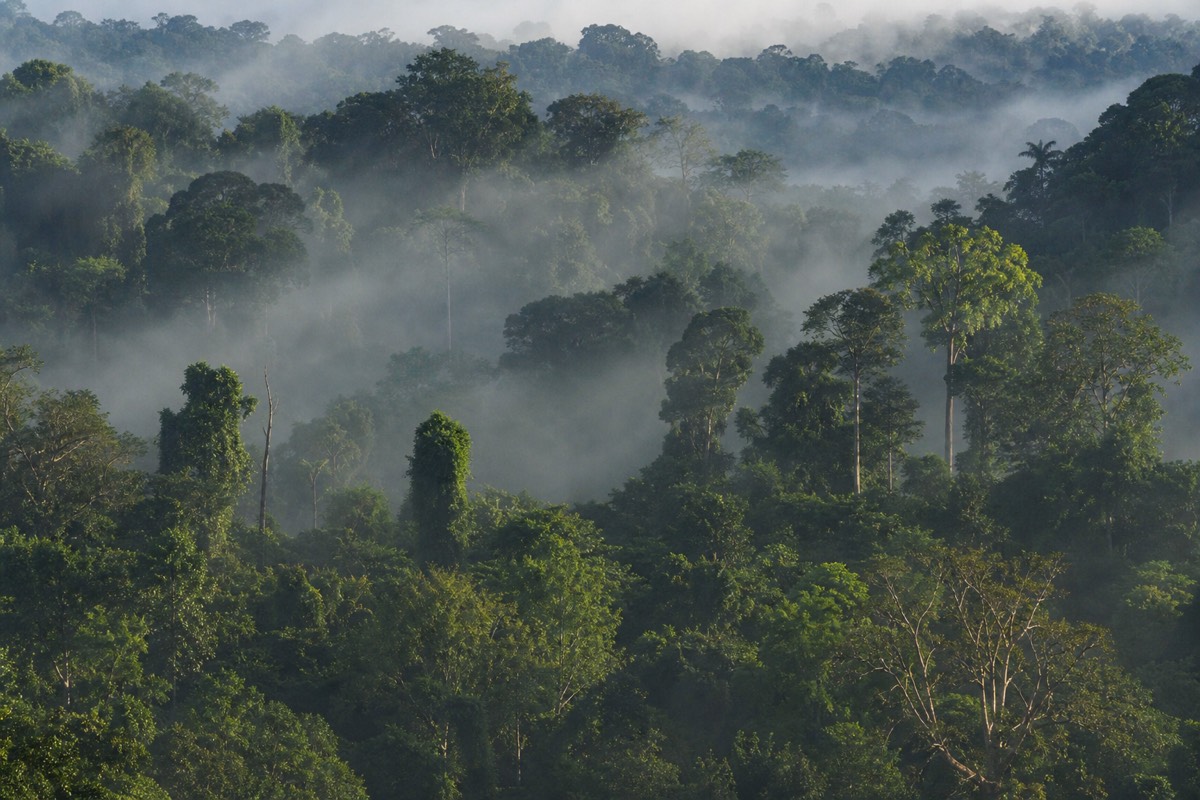
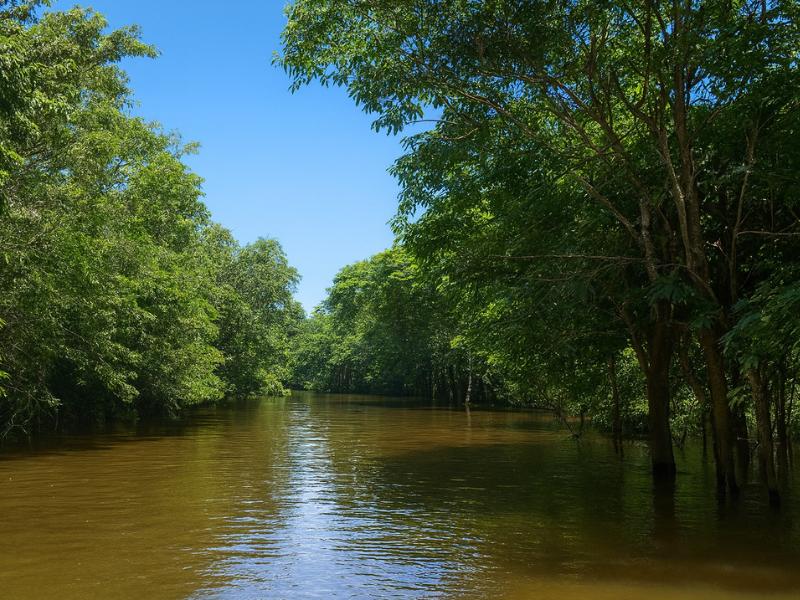
What makes the Amazon feel dangerous is unfamiliarity. Everything is warm, humid, loud and green, the water is opaque, and you cannot see more than a few meters into the trees. That combination reads as threat to a brain trained on temperate landscapes, which is exactly why the myths stick. The forest is not indifferent to you, but it is also not hunting you.
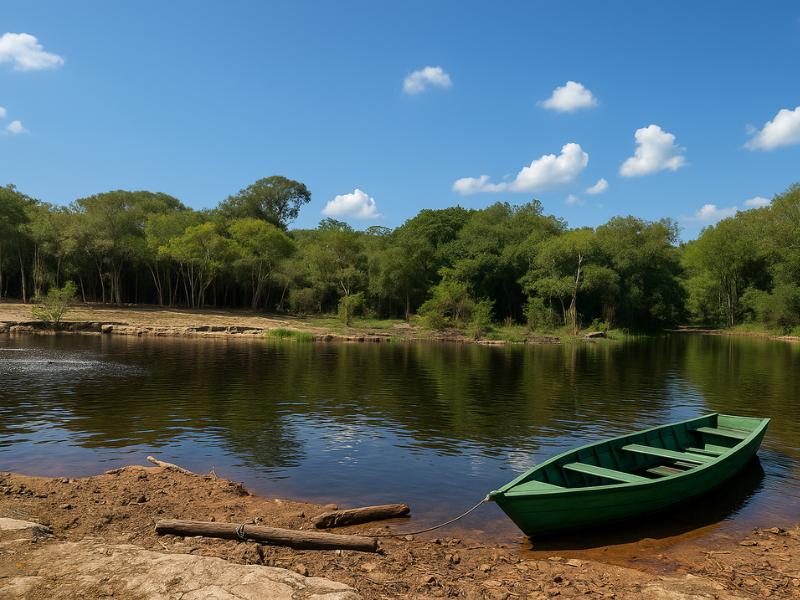
The genuine caution is about remoteness rather than teeth. A floating lodge on the Juma River sits around 100 kilometers south of Manaus, reached by speedboat and road. That is a beautiful place to spend three days and a slow place to evacuate from. It is why the sensible preparation for the Amazon looks like travel-health planning and packing discipline rather than anything to do with predators.
What is the most dangerous animal in the Amazon?
By any reasonable measure of how often it affects visitors, the mosquito. Mosquito-borne illness such as malaria and dengue is the statistically relevant day-to-day risk in the region, far ahead of encounters with any large animal. Insects are what guides warn you about first, and what past guests consistently say was the hardest part of the day.
This is not a scare tactic. It is standard travel-health framing, and it is the single most useful correction to the popular picture of the Amazon. Repellent, long sleeves and long trousers in the evening, and a mosquito net at night do more for your trip than any amount of worrying about the water. Multi-day lodges on the Juma and Mamori rivers include mosquito nets on the beds and air conditioning in the rooms for exactly this reason, and the camping trips issue hammocks with nets built in.
The pattern repeats across the site's own guest feedback: bugs come up far more often than any animal. Insect repellent is listed as a personal item to bring on effectively every trip, and that is not a formality.
Are piranhas actually dangerous?
Mostly no. Fatal piranha attacks on healthy humans are extremely rare. Most documented incidents are a single defensive bite, often from stressed fish in low water or during breeding season, rather than a shoal hunting a living person. Piranhas scavenging an already-deceased body is far better documented than a predatory attack.
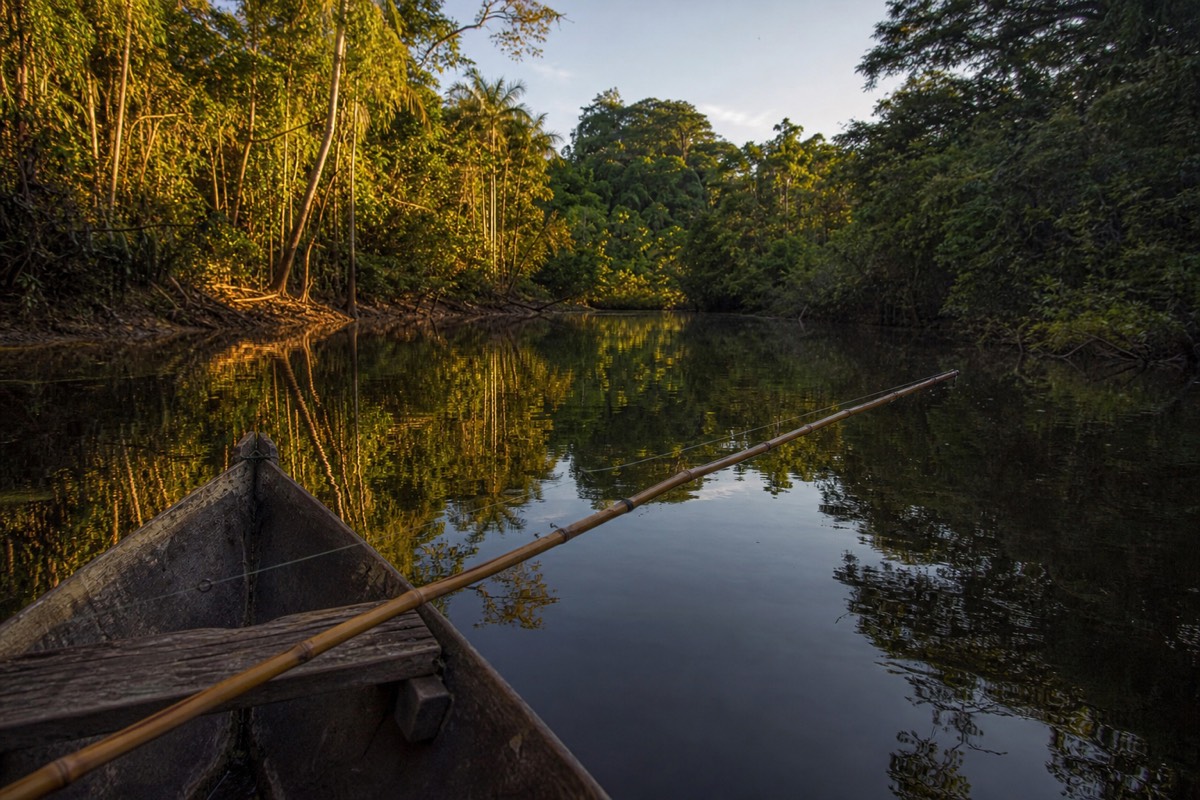
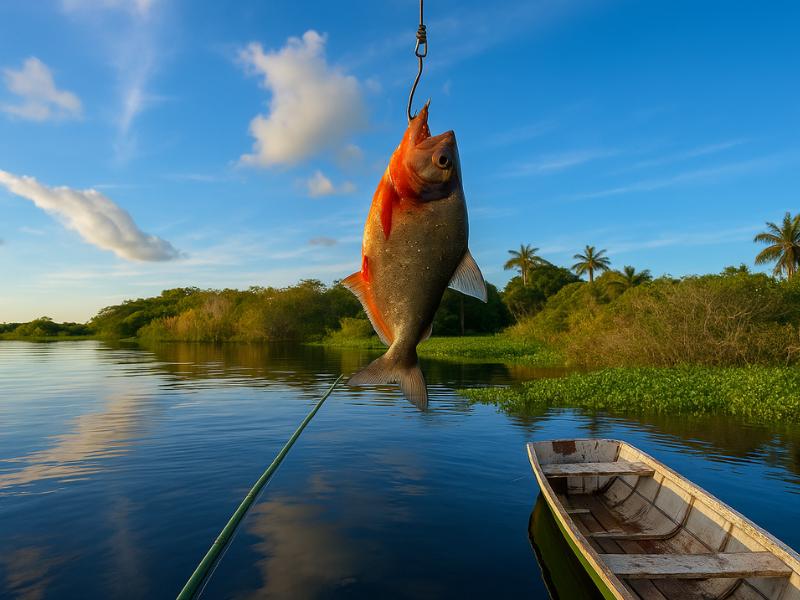
The cow-skeleton image comes from stunts and storytelling, not from research. Reporting on National Geographic's piranha work, summarized by Smithsonian Magazine, describes a fish that is opportunistic and defensive rather than a coordinated killer. That fits what happens on the water here every single evening, where visitors dangle bait on bamboo rods specifically to catch them, then hand them to a guide to unhook.
The practical risk is sharp teeth in a boat, not sharp teeth in the river. On the evening tour with piranha fishing and an alligator watch, guides handle the hook removal themselves. Guests catch fish, look at them, and release them. That is the whole encounter. We cover the swimming question in full in a separate piece on whether the Amazon River is safe to swim in.
How dangerous are anacondas?
Anacondas are the heaviest snakes in the world and they do live in the Amazon, but attacks on adult humans are rare. They are ambush hunters in water and dense vegetation, they avoid noise and movement, and a group of people in a motorized canoe is close to the least appealing thing in their environment.
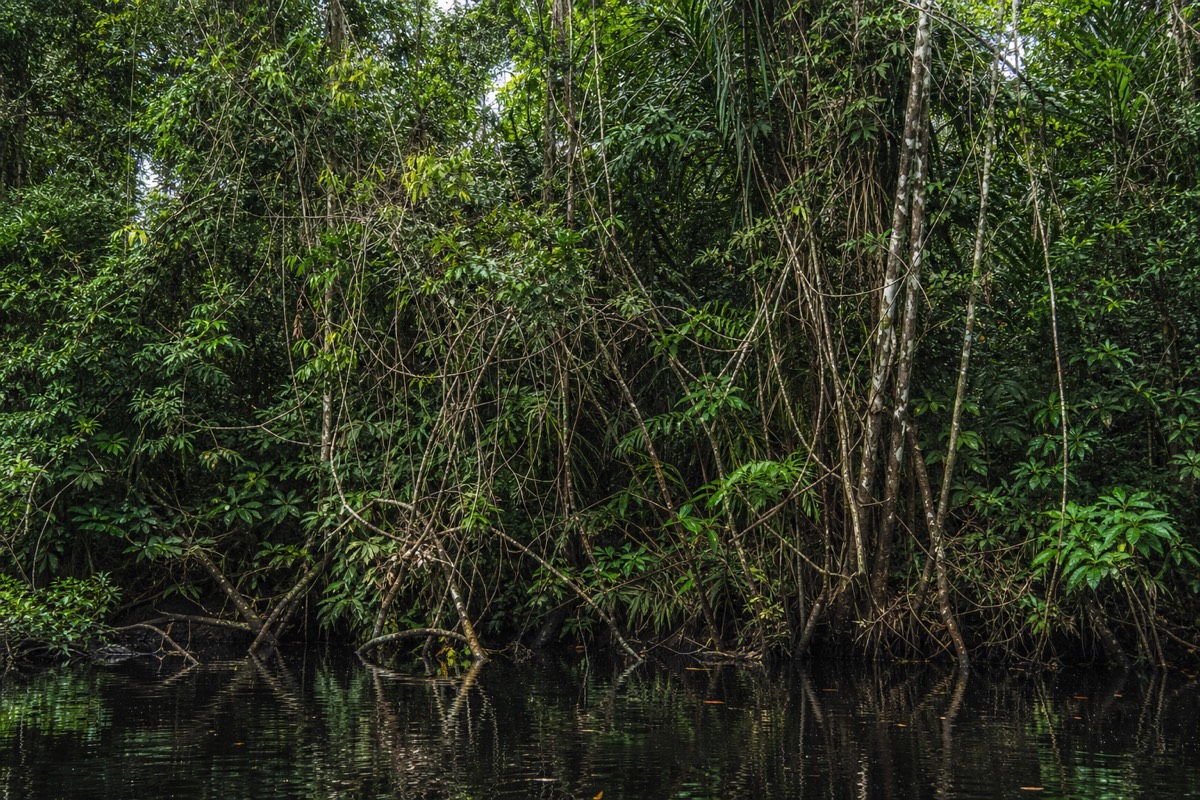
Seeing one at all is a lucky day rather than a hazard. None of the guided trips from Manaus treat anacondas as a headline feature, because they cannot be promised. What the jungle walks do promise is the small stuff you actually meet on a trail: scorpions, spiders, various snakes, insects, and the plants that guides use to explain how the forest is used medicinally.
The behavioral rules on a hike are the same rules that keep you safe with any wildlife anywhere. Stay on the path the guide is walking, keep your hands out of holes and hollow trunks, wear closed-toe shoes and long trousers, and do not reach for anything to get a better photo of it.
What about caimans on the night safari?
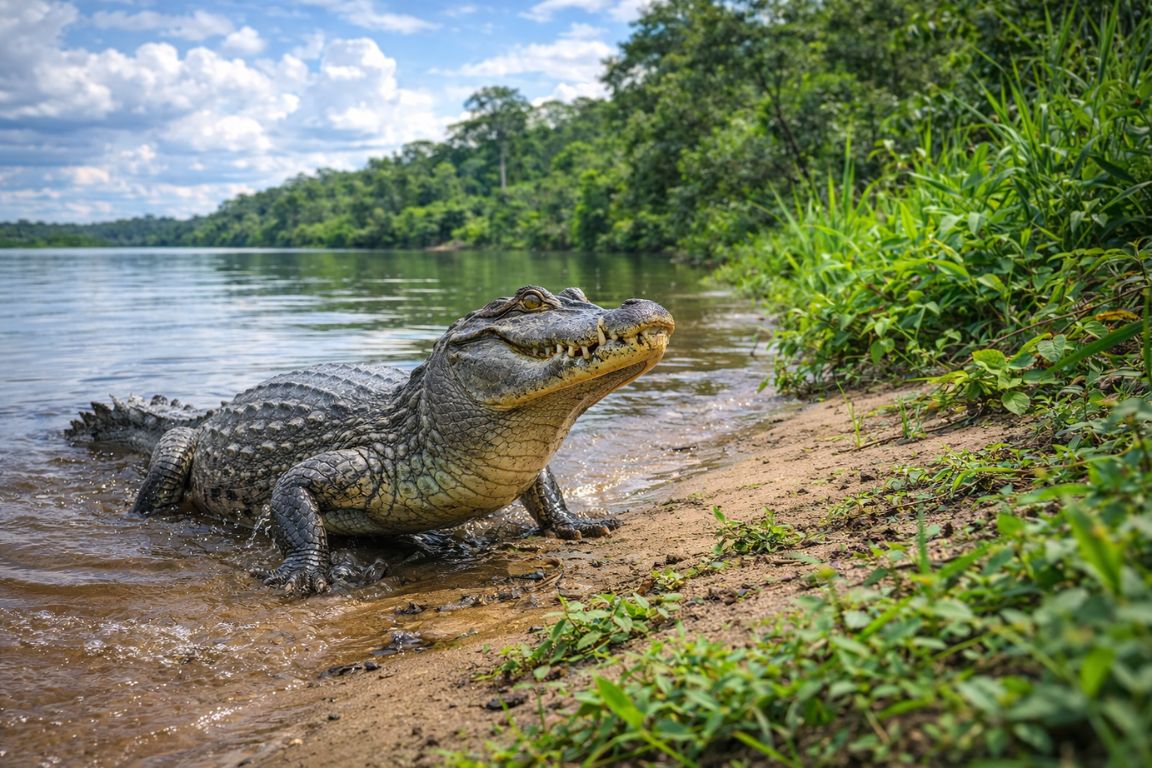
Caimans are present throughout Amazon waterways and generally avoid people. Guided night safaris exist precisely because a controlled, spotlit encounter with an expert is the safe version of a meeting that would otherwise happen unsupervised and in the dark.
This is one of the clearest examples of a guided trip converting a hazard into an experience. On the evening tour out of Manaus, the guide searches the bank after dusk, catches a caiman by hand, holds it so the group can see the animal properly and hear how it lives, then releases it back into the water. Handling is done by the guide alone. Guests watch. Past visitors describe the night spotting as thrilling and safe, which is exactly the intended outcome.
The full-day trips run a lighter version of the same thing at the end of the day: a sunset cruise into darkness with spotlights picking out caimans and other nocturnal life along the channels. Nobody gets in the water at night, and nobody handles anything.
Will you see a jaguar on an Amazon tour?
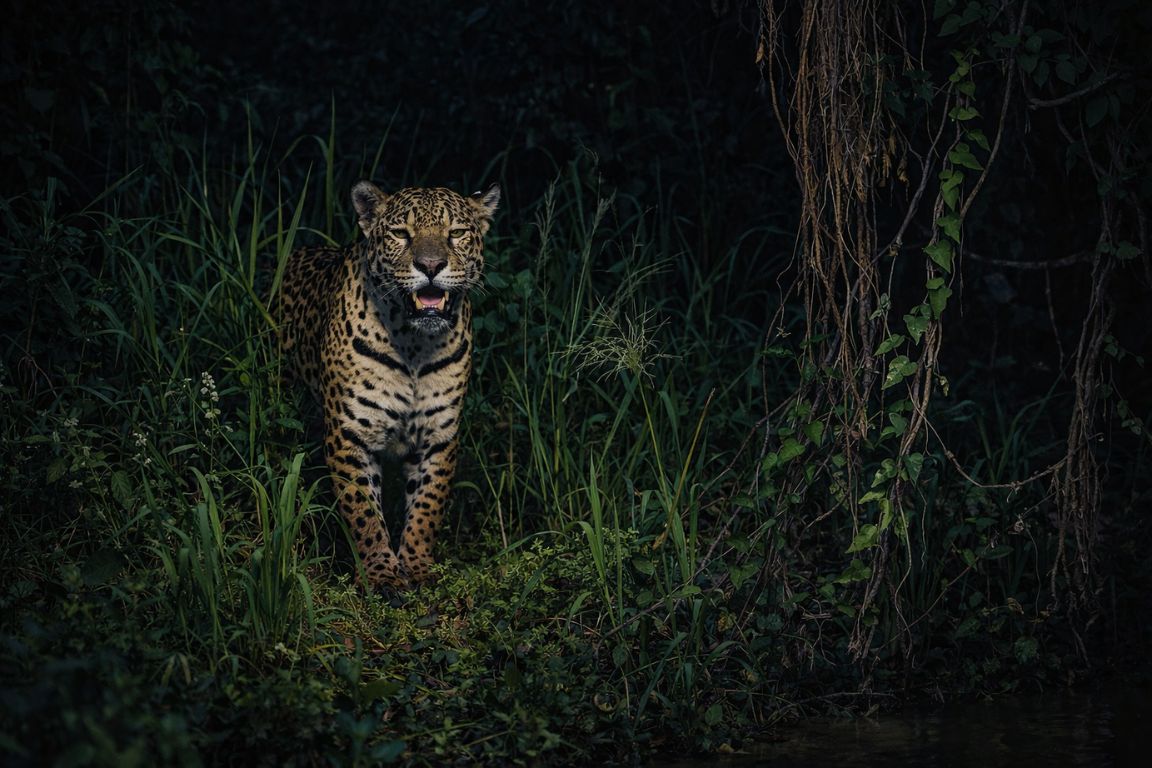
Almost certainly not, and any operator promising one is overselling. Jaguars are present in the Amazon biome but genuinely elusive, and reliable sightings are far more associated with the open Pantanal wetlands than with river and jungle tours from Manaus. Dense forest hides large animals extremely well.
We would rather say this plainly than let a hero photograph do the implying. Not one of the fourteen trips in our catalogue lists jaguar sightings as a feature, because none of them can honestly offer it. If seeing a big cat is the point of your trip, the Amazon is the wrong ecosystem to book for it, and no amount of money changes that.
What the Amazon reliably delivers is different and, once you adjust expectations, better: pink river dolphins that come to the boat, caimans in a torch beam, monkeys in the canopy, and birds in numbers that overwhelm anyone who has only birded in a temperate country. Our guide to what animals you will see sets realistic odds species by species.
| Animal | Its reputation | Real risk to a guided visitor | How tours manage it |
|---|---|---|---|
| Piranha | Shoals that strip flesh in minutes | Very low. Fatal attacks on healthy people are extremely rare; most incidents are a single defensive bite | Guides bait and unhook; swimming happens at chosen sites, not random ones |
| Anaconda | Constrictor that takes people | Very low. The heaviest snake in the world, but attacks on adults are rare | Stay on the guide's route; nothing is approached or handled by guests |
| Caiman | Alligator lurking at every bank | Low. Generally avoids humans | Spotlit night viewing; if an animal is handled, the guide does it and releases it |
| Jaguar | Stalking the trails | Effectively nil, because you will not see one | No trip promises a sighting; expectations set in advance |
| Snakes, spiders, scorpions | Everywhere, all lethal | Low with basic discipline; they are pointed out on walks as part of the education | Closed-toe shoes, long trousers, hands out of holes, guide leads |
| Mosquitoes | An annoyance | The highest everyday risk of anything on this list | Repellent, covered skin at dusk, mosquito nets at lodges and camps |
None of the verified Manaus itineraries offers dependable jaguar or other rare-species sightings. Do not choose a departure on that expectation.
Mosquitoes, malaria and dengue: the risk worth preparing for
Malaria risk exists in parts of the Amazon region and dengue circulates in Brazil more broadly. Yellow fever vaccination is not a mandatory entry requirement for Brazil, but the CDC recommends it for all eligible travelers aged nine months and older visiting the country, including the Amazon. Whether you take malaria prophylaxis is a decision for you and a travel health provider, based on your route and season.
That last point is the one to take seriously. Prophylaxis is not a blanket rule that an article can prescribe, because the right answer depends on where exactly you are going, when, for how long, and on your own medical history. Book an appointment with a travel clinic or your own doctor well ahead of departure, because the yellow fever vaccine needs to be given at least ten days before travel to be effective.
| Item | What the guidance says | What to do about it |
|---|---|---|
| Yellow fever | Not a mandatory entry requirement for Brazil, but CDC recommends it for eligible travelers aged 9 months and older, including for the Amazon | Discuss with a travel health provider; allow at least 10 days before travel |
| Routine vaccines | Brazil's Ministry of Health recommends visitors be current on COVID-19, yellow fever, polio, measles, rubella, diphtheria and tetanus | Check your records early; some need more than one dose |
| Malaria | Risk exists in parts of the Amazon region | A personal decision with a provider, based on itinerary and season, not a blanket rule |
| Mosquito bites generally | The most statistically relevant day-to-day risk in the region | Repellent, long sleeves and trousers at dusk, nets at night |
This is travel-health information, not medical advice for you personally. Your own itinerary, age and medical history change the answer, so the section above is a prompt to make an appointment rather than a substitute for one.
This is an individual medical decision. A tour booking cannot establish health suitability; bring the actual route and sleeping arrangements to your clinician.
Is it safe to swim in the Amazon?
On a guided tour, generally yes, at spots the guides choose. Swimming with pink river dolphins at a protected platform is a standard feature of full-day and multi-day trips from Manaus. Swimming alone, at night, or in an unknown stretch of main-river current is a different proposition entirely.
The full answer, including the piranha myths and the truth about the dolphins, is in our separate piece on whether the Amazon River is safe to swim in. The short version for planning purposes: bring a swimsuit and a towel, and let the guide pick the water.
Is Manaus safe for tourists?
Manaus is a large working city, and the sensible approach is the one you would take in any unfamiliar city: check your own government's current travel advice before you go, keep valuables low-profile, and use arranged transport at night.
We do not publish crime statistics we cannot source, so treat any article that quotes precise figures with caution and go to your foreign ministry's advisory page instead. What we can say concretely is that most visitors' city exposure is limited by how the trips are structured. Almost every tour from Manaus includes hotel pickup and drop-off, and several use air-conditioned vehicles to move between the hotel and the port or trailhead. Multi-day trips will collect you from the airport directly if that suits your flights.
What actually goes wrong on Amazon tours?
Overwhelmingly it is comfort and fitness, not danger. Heat and humidity, insect bites, mud on the trails in the wet season, long days, and mild disappointment when wildlife does not perform. Those are the honest failure modes, and every one of them is manageable with preparation.
Fitness is worth being straight about. The jungle walks are described as moderate, on short trails with uneven ground, and guides adjust the pace to the group. Guests with average fitness handle them. What none of these trips are is wheelchair accessible, because the terrain does not allow it, and a full day tour genuinely is a full day: hotel pickup around 8 in the morning and drop-off around half past eight at night.
Wildlife is the other honest caveat. Guides work hard at spotting and the odds are good for dolphins, birds, caimans and monkeys, but big animals are elusive in dense forest and nature decides. Dolphin interaction on some trips is optional and depends on the animals showing up.
| What you might see | Realistic odds on a guided trip |
|---|---|
| Birds | High. The region's diversity is the headline draw for birders |
| Pink river dolphins | High on trips built around a dolphin platform, though sightings are common rather than guaranteed |
| Caimans | High on night spotting with spotlights |
| Monkeys | Good, especially on the canopy and trail sections |
| Piranhas | High on fishing trips, since you are actively fishing for them |
| Sloths | Possible on some jungle treks |
| Jaguars | Very unlikely. Present in the biome, rarely seen; the Pantanal is the reliable destination for big cats |
Does the season change how risky it feels?
It changes the conditions rather than the danger. The dry months bring easier trails and cooler nights; the wet months bring mud, higher water and more insects, and push more of the day onto boats and canoes. Neither season is unsafe, and trips run through both.
| Season | Approximate months | Conditions | What it means in practice |
|---|---|---|---|
| Dry | May to October | Easier trails, wildlife concentrated along the river | The simplest walking, but cooler nights; pack a layer |
| Wet | November to April | Lush growth, flooded forest, higher water | Muddy trails and more insects; activity shifts onto the water |
Weather rarely cancels a departure, so the practical response is layers and a light rain jacket rather than a rearranged itinerary. Rain in the Amazon tends to arrive hard and pass, and guides plan the day around it instead of waiting it out.
How guided tours manage risk, day to day
The safety system on an Amazon tour is unglamorous and effective: an experienced bilingual guide, a small group, a known route, gear that suits the season, and someone in charge who handles anything with teeth. That combination is why nearly nothing dramatic ever happens.
Group sizes on the small-group trips run to a maximum of ten or twelve, which means the guide can actually see everyone. Bilingual guiding in English, Portuguese and often Spanish removes the instruction-gets-lost problem. Multi-day lodge trips include park fees, permits and insurance in the price, and put guests in private rooms with air conditioning and mosquito nets. Night activity happens with spotlights from a boat. Piranha hooks and caimans are handled by the guide, never by guests.
| Trip format | Group size | Guiding | What is included that bears on safety |
|---|---|---|---|
| Evening river tour, about 5 hours | Maximum 10 | Bilingual, English and Spanish | Hotel pickup and drop-off, boat transfer, all caiman handling done by the guide |
| Full jungle day, about 12 hours | Maximum 12 | Bilingual, English, Portuguese and Spanish | Hotel transfers, air-conditioned vehicle, lunch, bottled water, spotlights for the night section |
| Multi-day lodge stay, 3 to 5 days | Maximum 10 to 12 | Bilingual, English and Portuguese | Transfers, all meals, private rooms with air conditioning and mosquito nets, park fees, permits and insurance |
| Risk | What a guided day does about it | What you do |
|---|---|---|
| Insect bites | Nets at lodges and camps, timing that avoids the worst of dusk exposure | Bring strong repellent; cover arms and legs in the evening |
| Sun and heat | Shaded boats, bottled water and refreshments included, pace set by the guide | Hat, sunglasses, sunscreen, drink more than you think you need |
| Slippery trails | Route chosen for the season; wet season shifts activity onto the water | Closed-toe shoes with grip, long trousers |
| Wildlife handling | Guides do all handling and release; guests observe | Keep your hands to yourself and enjoy the show |
| Getting separated | Small groups of 10 to 12 on the small-group trips | Stay with the group, tell the guide before you wander |
| Remoteness | Multi-day lodge trips include insurance, permits and transfers | Bring your own medication in your day bag, not the main luggage |
| Health | Operators flag repellent and personal items as required kit | See a travel health provider before you fly |
What to bring, and why each item is there
The kit list for the Amazon is short and every item on it is doing safety work rather than comfort work. Repellent, long sleeves, long trousers, closed-toe shoes, a hat, sunglasses, sunscreen, a rain layer, a swimsuit and towel, and a waterproof bag for anything electronic.
| Item | What it is actually protecting you from |
|---|---|
| Insect repellent | The highest everyday risk on the trip. Guests describe the bugs as intense |
| Long sleeves and trousers | Bites at dusk, sun on the water, scratches on the trail |
| Closed-toe shoes | Uneven wet ground and whatever is on it |
| Hat, sunglasses, sunscreen | Equatorial sun amplified by reflection off the river |
| Light rain jacket | Rain arrives fast; trips rarely cancel for weather |
| Waterproof bag | Canoes, spray and humidity are hard on phones and cameras |
| Swimsuit and towel | Dolphin platforms and guide-chosen swim spots |
| Your own medication | You are hours from a pharmacy once the boat leaves |
Our full packing list goes further, including what to leave behind. The one-line version: pack for insects and water, not for predators.
So, is the Amazon dangerous?
The forest deserves respect and it does not deserve the horror-film reputation. The animals that made it famous are largely indifferent to you, the ones that actually cause trouble weigh less than a gram, and the thing most likely to spoil your day is heat, mud or a wildlife sighting that did not happen. Go with a guide, take the travel-health appointment seriously, pack repellent as though it were a passport, and the Amazon turns out to be one of the more forgiving wild places a traveler can visit.
That is the case for going guided rather than improvising. On guided Amazon tours from Manaus, someone who knows the water picks the route, the swim spot and the moment to turn back, which is what actually keeps the risk where it belongs: low, boring and behind the scenes.